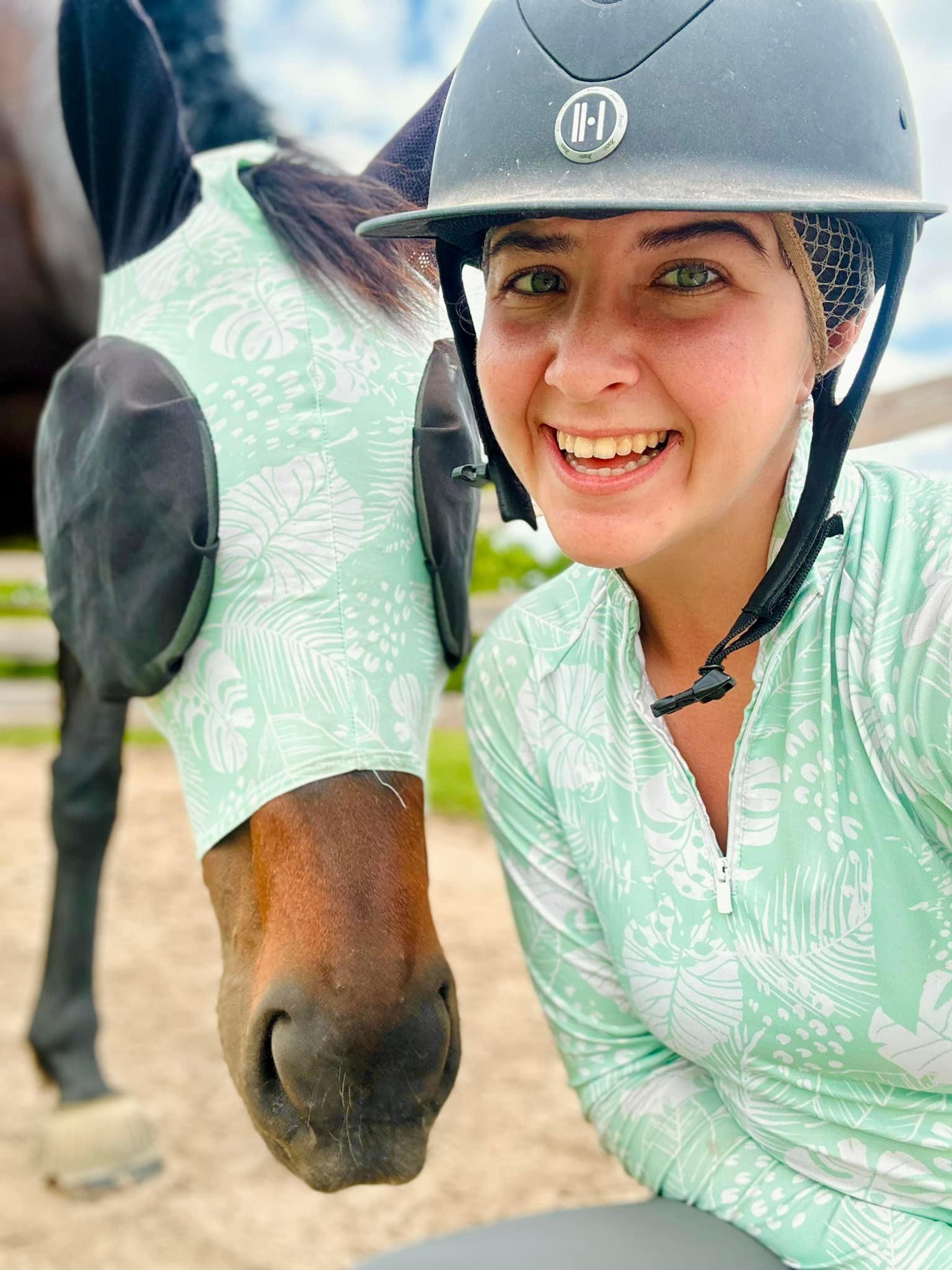
You finally got the topline. It took months of careful work, consistent sessions, the right feed program, probably a new saddle fit. You could see it across the back, up into the loin, down the neck. Your vet noticed it. Your trainer noticed it. You were proud.
Then life happened. A few weeks of rushed rides, some trail hacking with a collapsed hip and a loose rein, a week off — and when you looked again, it was gone. Not diminished. Gone.
This is not a feeding problem. It is not a supplement problem. And it is not bad luck. It is a hypermobile horse problem, and once you understand why it happens, you can stop chasing that topline in circles.
Topline Is Not Just Muscle Mass
With a typical horse, topline development is mostly a function of appropriate loading over time. Work the right muscles consistently, feed adequate protein, and the muscle mass builds and largely holds.
With a hypermobile horse, that equation breaks down because topline is not passive tissue on these horses — it is active stabilization. The muscles along the back, loin, and crest are not just sitting there doing mechanical work. They are compensating, in real time, for a skeletal system that doesn’t provide the joint stability that tighter-ligamented horses get for free.
A hypermobile horse has more range of motion than his joints were designed to load through. When he moves under saddle, every step is a micro-negotiation between the force coming from the ground and the muscles trying to keep things from folding where they shouldn’t. That negotiation requires the horse to be organized — meaning the rider has to give him something reliable to work against.
When your riding is precise, you are providing that organization. Your neutral spine, your consistent leg, your quiet and honest contact — these give the horse’s nervous system a reference point. With that reference, he can recruit and hold the stabilizing muscles through the topline. Over time, those muscles develop because they are actually being used to do something useful.
When your riding gets sloppy — collapsed hip on one side, hands that move independently of your body, a driving seat that blocks the back instead of inviting it — the horse loses that reference. He can’t find the organization from the outside, so his nervous system either shuts the stabilizers down or recruits them erratically. The muscle isn’t being used the same way. And for a hypermobile horse, muscles that aren’t being used for actual stabilization do not hold their condition the way a more structurally stable horse would.
The Specificity Problem
Most horses can tolerate a range of rider quality and still maintain general conditioning. A moderately fit horse on a competent but imperfect rider can keep his baseline muscle tone through everyday movement alone.
A hypermobile horse doesn’t have that buffer. His topline development is specifically tied to the neurological demand of doing stability work under load. When that demand disappears — even temporarily — the muscle recruitment pattern changes first, and the visible topline follows within weeks.
This is why you can feed the same amount of high-quality protein, keep the same turnout schedule, and maintain the same number of rides per week, and still watch the topline vanish if the quality of those rides drops below a certain threshold.
It is not the quantity of work. It is the precision of it.
Where Riders Lose Precision (And Where It Costs the Most)
The specific precision failures I see most often with hypermobile horses:
Collapsed hip on the inside. This seems small but it rotates your pelvis asymmetrically and blocks the horse’s inside hind from tracking up. He has to compensate by dropping the loin on that side. Do this consistently and that compensation becomes the default pattern — which means the topline muscles on that side stop getting recruited correctly.
A driving seat that grips or shoves. I know, everyone wants to “push the horse forward from the seat.” But a hypermobile horse’s back is already unstable. When you add a seat that shoves or grips rather than absorbs and follows, his first instinct is to hollow and brace. A hollow back cannot recruit the longissimus correctly. You might feel like you’re creating impulsion. You’re actually creating bracing — and bracing is the topline’s enemy.
Inconsistent contact that the horse has to search for. A hypermobile horse often develops a habit of seeking the contact erratically because it was never reliable to begin with. If your hand isn’t consistent, he can’t establish the longitudinal connection that allows the neck and back muscles to work as one system. You get a horse that reaches sometimes, inverts sometimes, leans sometimes — and muscles don’t develop cleanly under that kind of inconsistency.
Leg yield and shoulder-in ridden without the horse’s back actually swinging. These lateral movements are some of the most effective tools we have for building topline on a hypermobile horse — but only if they’re done correctly. If the horse is just moving sideways without true lateral bend, without the back swinging through, the stabilizers aren’t doing the work. You’re just moving his feet. I hear from riders all the time who can’t understand why their horse braces and leans on the inside shoulder during these movements — and it’s almost always because the back has disconnected. The Unlocking the Back of a Stiff Horse ride-along walks through exactly this: a 16-minute warmup sequence using neutral spine walk and trot work, shoulder-in, leg yield, and transitions specifically designed to get that back swinging before you start asking for precision work. If this pattern sounds familiar, that is the resource I would start with.
What “Precision” Actually Means in the Saddle
I want to be specific, because “ride more precisely” is not useful advice.
Precision for a hypermobile horse means:
- A neutral pelvis that doesn’t grip or shove. Your seat bones weighted evenly, your lower back long rather than braced. Think of following the horse’s back rather than pushing it.
- A leg that stays on without gripping. Steady, breathing contact with the horse’s barrel — enough that he can feel you’re there, not so much that he has to brace against it.
- Contact that is honest and consistent. Not pulling. Not throwing away. A steady, elastic boundary the horse can find and use.
- Transitions ridden with your whole body. Not just a hand half-halt. Not just a driving seat. Transitions that involve your breath, your balance, and a genuine conversation between your body and his.
This is not about being perfect. It is about being consistent enough that your horse’s nervous system can predict what you’re going to do and organize around it.
The Maintenance Reality
Here is the part no one tells you: for a hypermobile horse, topline is not something you build and then keep. It is something you maintain through continued precise work. The fitness gains made during correct training recede faster on these horses because so much of that topline development is neurological — it is the muscles being recruited well, not just muscles being large.
This doesn’t mean you can’t take trail hacks or easy days. It means you build enough correct work into your weekly schedule that the neurological demand stays present. I generally recommend at least three to four sessions per week where precision is the actual goal, even if those sessions are short.
On easy days, you can still ride well. Neutral spine even on a long rein. Honest contact even in a loose walk. Precision doesn’t mean intensity. It means attentiveness.
If you want a framework for building these habits into your daily rides, the ride-along library is a good place to start — audio lessons you can play while you ride so you’re not relying on memory while you’re also trying to feel what your horse is doing.
What to Do Right Now
If you’ve watched a good topline fade, the instinct is to go back to drilling lateral work and transitions until it comes back. Resist that impulse.
Start with the quality of your basic gaits. Walk with intention. Trot with a back that swings. Check your hip, your seat, your contact before you start asking for anything more. The topline will come back — but it will come back faster if you rebuild the foundation than if you try to force the result.
A hypermobile horse is asking you to be a more precise rider than you might have had to be with a different horse. That’s not a criticism. It’s an opportunity.
If you want eyes on this — if you’d like help identifying exactly where your riding is losing precision and what that’s costing your horse’s topline — I work with riders on exactly this in clinics. Whether you’re in Aiken or I’m traveling to you, we can sort out what’s happening and build a plan that actually holds. Reach out at /contact and let’s talk about what you’re working with.