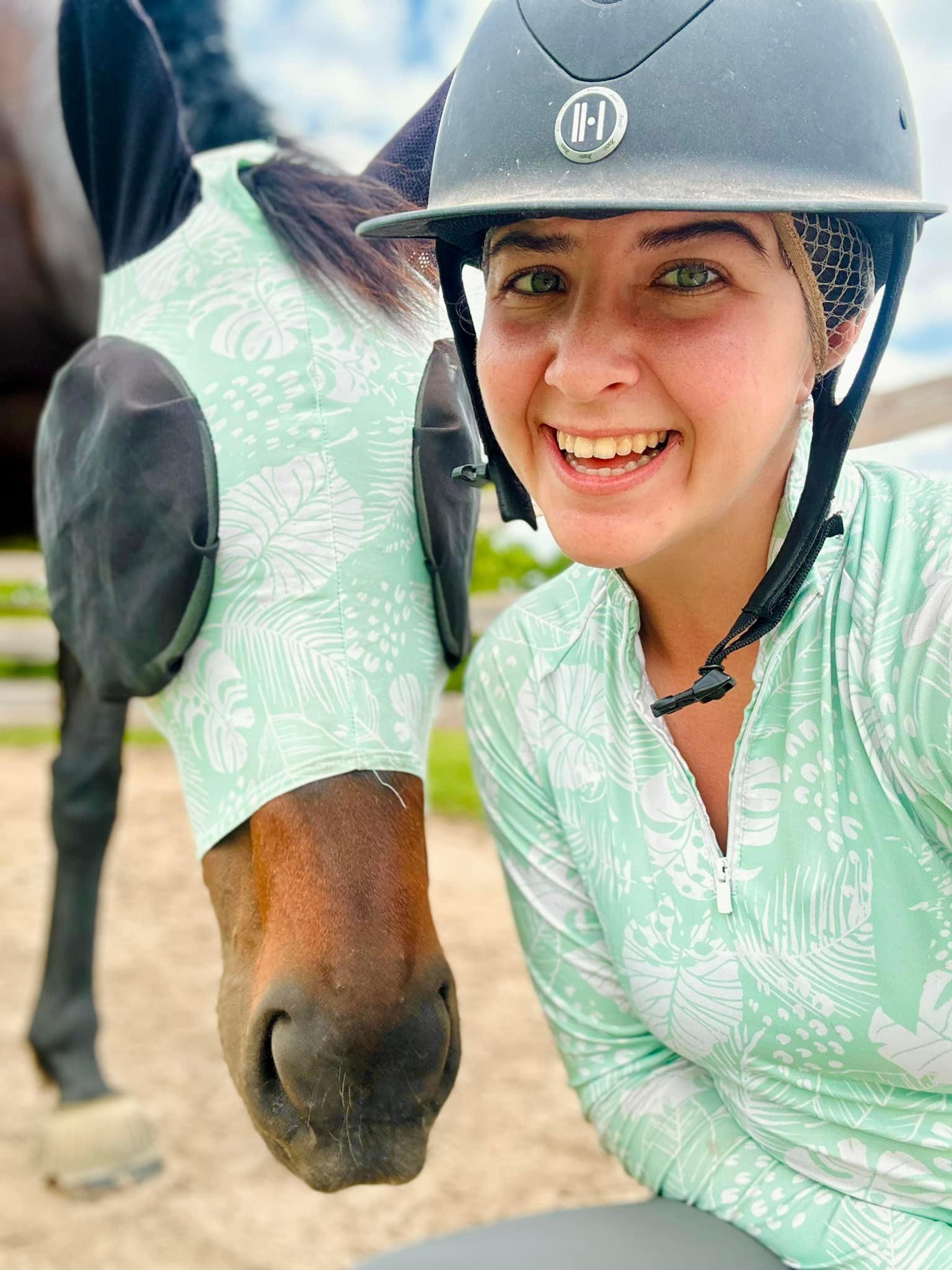
Horses change shape. It happens faster than most riders expect — through a conditioning block, a layup, a feed change, a season of heavier competition, or just the natural arc of a young horse filling out. The saddle that fit in March may be sitting differently by September, and the horse is telling you about it: a new tightness in the warm-up, sweat patterns that were not there before, a back that used to swing freely and now feels locked. The instinct is to call the saddle fitter immediately and start wondering if you need a new saddle. Sometimes that is exactly right. But between fitter visits — and often as a long-term solution for horses whose shape evolves continuously — a shimmable half pad with the right inserts is one of the most practical tools in the tack room. You are not compensating for a broken fit. You are managing a living, changing horse.
This post contains affiliate links. If you shop through them I may earn a small commission at no extra cost to you — and you’ll get my reader discount. I only feature gear I’d actually put on my own horses or wear for a full day in the saddle.
The Ogilvy Shimmable Half Pad is the pad I point riders to when the conversation is about a back that is shifting — not a saddle that is catastrophically wrong. Here is what it does, how the shimming system works in practice, and when the premium sheepskin version is worth the upgrade.
The Quick Comparison
| Pad | Price | Best for | Shimming | Sheepskin |
|---|---|---|---|---|
| Classic Jump Shimmable Half Pad | $240 | Jump / eventing riders, changing back shape | Front, rear, middle pockets | No |
| Classic Dressage Shimmable Half Pad | $240 | Dressage riders, evolving back shape | Front, rear, middle pockets | No |
| Classic Jump Sheepskin Shimmable Half Pad | $319 | Premium breathability + correction, sensitive backs | Front, rear, middle pockets | Yes |
| Custom Jump Sheepskin Shimmable Half Pad | $319 | Same as above, color/monogram options | Front, rear, middle pockets | Yes |
| Memory Foam Inserts / Gummy Inserts | from $75 | Required to make any shimmable pad correct anything | — | — |
The Core Pick: Ogilvy Shimmable Half Pad
The Classic Jump Shimmable Half Pad ($240) and the Classic Dressage Shimmable Half Pad ($240) are the same concept in discipline-specific cuts. The pad is built with discrete shim pockets at the front, rear, and middle — three locations that correspond to the three most common fit problems that develop as a horse changes shape.
The front pocket addresses wither height and shoulder angle. When a horse loses topline through a layup or builds shoulder mass through conditioning work, the way the saddle sits at the pommel changes. Too much clearance and the saddle rocks; not enough and there is wither contact. A shim in the front pocket raises the front of the pad to restore a level, balanced tree position without touching the saddle itself.
The rear pocket addresses the opposite end: a back that drops behind the saddle, a horse that is developing hindquarter muscle and changing the angle of the cantle, or a horse coming back into work after time off whose hindquarters are temporarily softer than the shoulders. Shimming the rear lifts the back of the pad to level the seat.
The middle pockets address lateral balance. If your horse consistently sweats more on one side, if your saddle drifts consistently to one direction, or if you are seeing uneven muscle development along either side of the spine, a shim on one side corrects that tilt. This is also where the shimmable pad becomes the answer for the horse with mild asymmetry in the back — not a crooked horse that needs a veterinarian, but the horse that simply loads more heavily on one side than the other and needs a pad that meets that asymmetry rather than ignoring it.
The pad itself is quilted, not memory foam, which means it has more structure than the Memory Foam Half Pad. That structure is intentional — you need a pad that holds the shim in the correct position and does not compress or migrate during work. A softer pad would allow the insert to shift, which defeats the purpose of correcting the fit.
Who this pad is for: Horses whose back shape is actively changing — young horses filling out, horses returning from layup, horses in a significant conditioning phase. Horses with mild asymmetry. Riders who want to manage fit adjustments between saddle fitter visits rather than waiting for a full refit every time the shape shifts. Horses that are 80 percent well-fitted in their current saddle but need help at the front, rear, or one side.
Who it is not for: Horses whose saddle is a fundamental mismatch — wrong tree width, severely rocking panels, bridging across the back. Shimming cannot correct structural problems in a saddle. If the panels are not making even contact regardless of angle, shims are not the answer; a different saddle or a reflocking is. Also not for riders who want pressure distribution without correction — the Memory Foam Half Pad is the better pick in that case.
How the Shimming System Actually Works
The shims do nothing without the inserts. That is the most common misunderstanding I encounter: riders buy the shimmable pad, slide nothing into the pockets, and then report it is just a quilted half pad. It is. The pad creates the architecture. The Memory Foam Inserts / Gummy Inserts (from $75) are what actually correct the fit.
Ogilvy offers two insert materials: memory foam and gummy. Memory foam is softer and compresses slightly under load, giving a more gradual correction. Gummy is firmer and holds its shape under compression, giving a more assertive correction. For a horse whose back is actively changing — gaining or losing muscle week to week — I tend to start with memory foam inserts because they are more forgiving and easier to adjust as the shape continues to evolve. For a horse with a stable but asymmetrical back, gummy inserts deliver more reliable correction over time.
The process for a horse whose shape is changing is straightforward: check your sweat patterns after three or four rides, watch for where the pad is making more or less contact, and adjust the inserts accordingly. You are not permanently setting the pad and walking away. You are re-assessing periodically and moving or removing inserts as the back changes. That is the point. A shimmable pad is a tool that moves with your horse, not a static intervention.
One practical note: do not over-shim. The temptation when a saddle feels off is to add more — more shim, thicker inserts, front and rear and both sides simultaneously. That is rarely the right move. Start with one correction, ride for a week, and assess before adding another. A pad loaded with inserts in every pocket is usually compensating for a saddle that does not fit and needs professional attention, not more shimming.
I have talked through how back shape changes with conditioning and how that interacts with saddle fit on the podcast — if you are navigating this in real time with a horse, that episode is worth your time.
Ready to try the Ogilvy Shimmable Half Pad? Use code SAMANTHABAER10 for 10% off at Ogilvy Equestrian → https://ogilvyequestrian.com/samanthabaer
The Premium Option: Sheepskin Shimmable Half Pad
The Classic Jump Sheepskin Shimmable Half Pad ($319) and the Custom Jump Sheepskin Shimmable Half Pad ($319) add a real sheepskin top layer to the same shimmable pocket architecture. The dressage version is available as the Custom Dressage Sheepskin Shimmable Half Pad ($319) for those riding in a dressage saddle.
The reason to choose this over the standard shimmable pad is not about fit correction — both pads do the same corrective work. The sheepskin layer adds two things: surface breathability and a natural friction-management interface between the pad and the horse’s coat.
For a horse whose back is changing shape, the back is often sore or reactive in the process — particularly during the early phases of conditioning work when you are asking muscles to develop that have not been asked to work in a while. A horse coming back from a layup often has a tight, tender back even when the saddle fit is reasonable. The sheepskin layer addresses that surface sensitivity directly. It wicks sweat more efficiently than the quilted top, it does not trap heat against the back the way synthetic materials can, and for a horse that is moving through a reactive phase, that surface comfort is meaningful.
The honest tradeoffs: $319 is a real number. Sheepskin requires more careful laundering than the standard quilted pad — cold water, gentle cycle, lay flat to dry, and it needs time. If you are in the middle of summer in a warm climate, a sheepskin pad retains slightly more heat than the standard option, and for a horse that is already sweating heavily, you will need to weigh that. We are at the tail end of summer right now, and for riders heading into fall the sheepskin version becomes increasingly practical — the warmth that is a mild liability in peak summer is an advantage as temperatures drop.
Who this pad is for: Horses whose backs are both changing shape and reactive or sore through the transition. Horses that are sensitive at the surface level — fine with pressure distribution but irritated by synthetic materials or heat accumulation. Riders who want the correction and the premium surface and are planning to use this pad for multiple seasons.
Who it is not for: Riders primarily motivated by price — the standard shimmable pad delivers the same correction for $79 less. Riders in climates where heat management is an ongoing concern through most of the year. Horses whose back sensitivity is structural rather than surface-level.
What to Pair It With
The shimmable pad sits between a baby pad and the saddle. Do not skip the baby pad. The Classic Jump Baby Pad ($65) or the Custom Jump Baby Pad ($65) give you a fresh, sweat-wicking layer against the horse’s skin, protect the shimmable pad from direct sweat contact, and make laundry easier — you are washing the baby pad frequently and the shimmable pad less often. Dressage riders want the Classic Dressage Baby Pad ($76) or Custom Dressage Baby Pad ($76) underneath.
The Memory Foam Inserts / Gummy Inserts (from $75) are not optional. Budget for them alongside the pad from the start.
If your horse also has a wither clearance concern on top of a changing back shape — a horse that is gaining through the shoulder and the tree is starting to sit closer to the wither — consider whether a Classic Jump Profile Pad ($85) addresses the clearance question first before you start correcting angle with shims. Clearance and balance are separate problems, and trying to solve clearance with shims often creates new issues.
The Decision Framework
If your horse is changing shape and your saddle is a reasonable fit otherwise, here is how I would walk through the decision:
Start with the standard shimmable pad. The Classic Jump Shimmable Half Pad or Classic Dressage Shimmable Half Pad at $240 is the right answer for most horses and most budgets. Add the Memory Foam Inserts / Gummy Inserts from the start. Total investment: $315 and up depending on how many inserts you buy. That is significantly less than a saddle refit and infinitely less than a new saddle.
Upgrade to sheepskin if your horse is also reactive at the surface. If the back is sore through the conditioning transition, if you have a naturally friction-sensitive horse, or if you are heading into fall and want a pad that will serve you through a cooler season, the Classic Jump Sheepskin Shimmable Half Pad at $319 is worth the additional cost. Add the Custom Jump Sheepskin Shimmable Half Pad if you want color and monogram options.
Do not use either pad as a substitute for a saddle fitter. The shimmable pad buys you time and manages ongoing variation between visits. It does not replace the visit. If you have not had a qualified fitter assess your saddle in the last twelve months — or if your horse’s shape has changed significantly since the last assessment — schedule that appointment. Use the shimmable pad to manage the interim and to support the fit between visits, not to avoid the conversation altogether.
The Bottom Line
A horse who is changing shape does not automatically need a new saddle. Before you start that conversation, find out whether what you are dealing with is a back in transition that a shimmable pad and inserts can manage. The Classic Jump Shimmable Half Pad and Classic Dressage Shimmable Half Pad at $240 — paired with Memory Foam Inserts / Gummy Inserts — give you a system that moves with the horse and can be adjusted as often as the back requires. The Sheepskin Shimmable Half Pad at $319 adds surface breathability and natural comfort for horses whose backs are reactive through the transition. Both are tools for managing a living, changing horse — which is the only kind of horse any of us actually has.
Ready to try the Ogilvy Shimmable Half Pad? Use code SAMANTHABAER10 for 10% off at Ogilvy Equestrian → https://ogilvyequestrian.com/samanthabaer