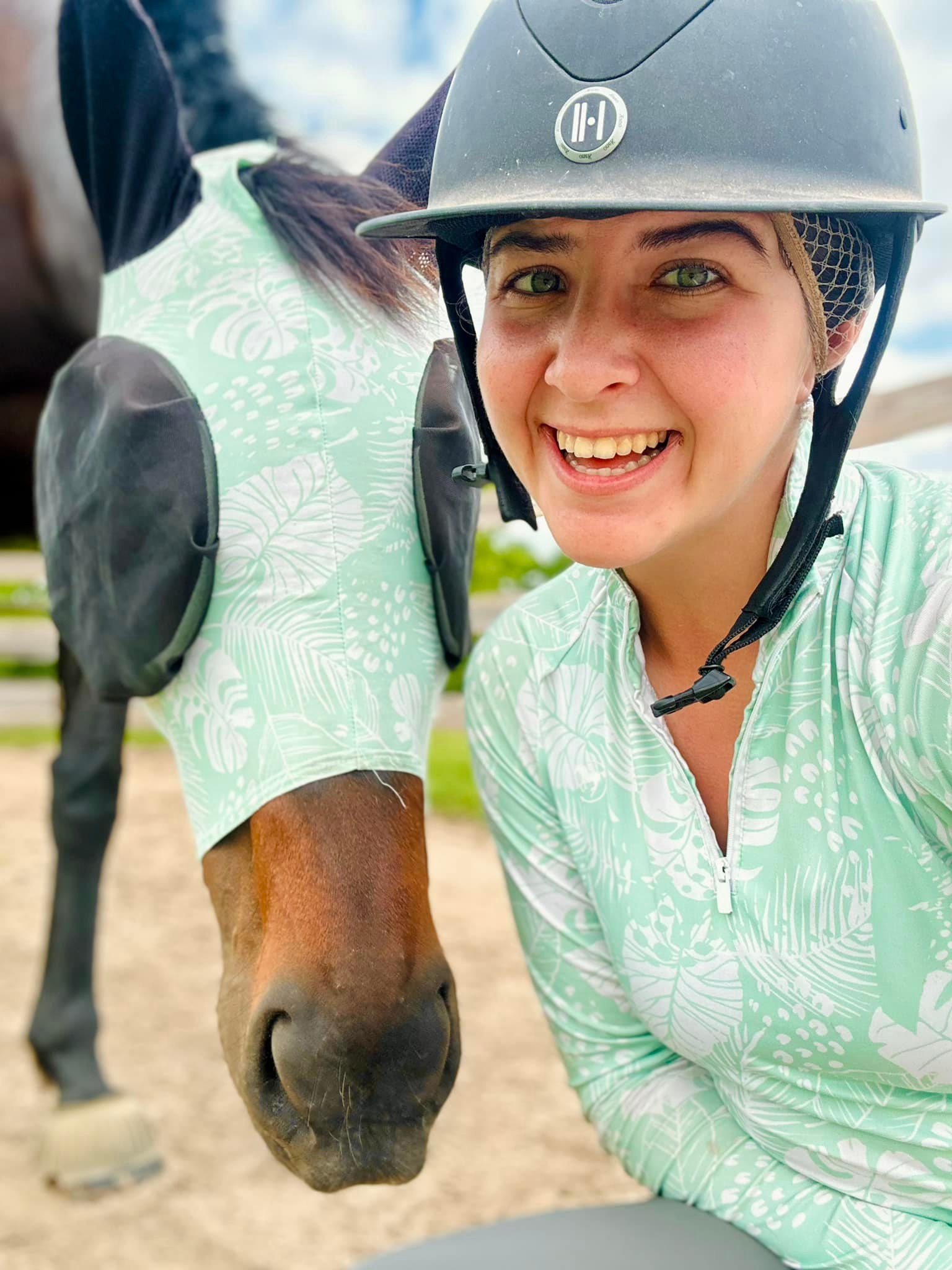
Your horse got three weeks off after the last show of the season. Maybe six, if the weather and your schedule both stopped cooperating. He spent it in the field getting fuzzy and happy. Now it’s November, you’re tacking up again, and the saddle that fit well in September sits differently. The withers look sharper. The pocket behind the shoulder has hollowed out. The pommel sits lower, or the saddle rocks. Your saddle didn’t change. His topline took a vacation too. The right pad covers the eight or so weeks it takes to bring it back.
This post contains affiliate links. If you shop through them I may earn a small commission at no extra cost to you — and you’ll get my reader discount. I only feature gear I’d actually put on my own horses or wear for a full day in the saddle.
Before you buy anything, be clear about which problem you’re solving. A horse coming back from a break usually has one or both of two issues. The first is clearance: the muscle beside the withers has dropped, so the front of the saddle sits closer to bone. The second is distribution: the back has gone soft and a little uneven, so the panels stop making even contact and pressure collects in a few spots. The Profile Pad solves the first. The Memory Foam Half Pad solves the second. Some horses need both for the first few weeks back. Very few need both for long.
Profile Pad vs. Memory Foam Half Pad at a Glance
| Product | Price | What it solves | Best for |
|---|---|---|---|
| Classic Jump Profile Pad | $138 | Wither clearance, back-shape conformity | Jump and close-contact saddles |
| Classic Dressage Profile Pad | $138 | Same, dressage cut | Dressage saddles |
| Classic Jump Memory Foam Half Pad | from $195 | Even pressure across a soft back | Jump saddles that bridge or rock |
| Classic Dressage Memory Foam Half Pad | from $195 | Same, dressage cut | Dressage saddles |
| USA Custom Jump Profile Pad | starting at $101.50 (customizations add) | Profile Pad you build yourself | Riders who want their own colors or logo |
The Profile Pad: For the Horse Whose Withers Suddenly Look Sharp
This is the pad I reach for first with most horses coming back from time off. When the muscle on either side of the withers drops, the saddle doesn’t actually change size. It sinks. The pommel comes down, the front of the tree sits closer to the withers, and you get that nose-down feeling that pitches you toward the horse’s ears.
The Classic Jump Profile Pad ($138) is a contoured pad. It isn’t a cushion and it isn’t a half pad. It provides wither clearance and follows the shape of the back. That makes it the right answer for a horse who needs clearance, not cushion, which is exactly the post-break picture for most horses. You can use it on its own under the saddle, or under a half pad if the back also needs distribution help.
Real-use check: Tack up, girth to your normal hole, and get on. Have someone slide fingers between the pommel and the withers while you sit in two-point and then in full seat. If that gap closed over the break and the pommel now sits close to the withers, use the Profile Pad. Re-check after a couple of rides, once the pad has settled.
Match the cut to the saddle, not the discipline. Under a dressage saddle, use the Classic Dressage Profile Pad ($138). A jump-cut pad under a long dressage flap bunches in the wrong place and moves your leg. Hunter riders on a hunter saddle should look at the Classic Hunter Profile Pad ($138). For sizing against your saddle, check the product page before you order.
Classic or USA Custom? The Classic line is finished and ready to ship. That matters if you’re bringing the horse back next week and not next month. The USA Custom Jump Profile Pad starts at $101.50 as a base model, and every customization adds to that price. Choose it because you want to build it your way, not as a budget version of the Classic.
Who it suits: The horse who lost muscle at the withers and behind the shoulder, whose saddle now sits low in front. It also suits the horse who is still fairly even left to right and just needs the front end lifted back into position.
Who it doesn’t suit: The horse whose main problem is a soft, uneven back through the middle of the saddle. The Profile Pad won’t fill a dip under the center of the panels. And if your horse came back from vacation with a grass belly and a wider barrel, check the fit through the shoulder before you add any layer. A saddle that is already snug gets tighter with every pad underneath it.
The Memory Foam Half Pad: For the Back That Went Soft
Some horses keep their withers reasonably well over a break but lose tone through the back. The saddle doesn’t drop in front. It bridges or rocks instead. You’ll see it in the sweat marks: dry patches in the middle of the panel, and wet spots concentrated front and back, where the saddle is now resting on two points instead of along the whole panel.
That horse needs distribution, and the Classic Jump Memory Foam Half Pad (from $195) is my lead pick for it. It’s a thinner half pad with memory foam pockets that spread pressure evenly across the back. Because it’s thin, it fills small gaps without lifting the saddle the way a thick schooling pad would. That’s what you want on a horse whose shape will keep changing every week as he gets fit again. Dressage riders should use the Classic Dressage Memory Foam Half Pad (from $195).
If your horse is sensitive along the spine, or the channel feels tight now that he’s softer, look at the Classic Jump Butterfly Memory Foam Half Pad (from $195). It’s cut along the spine to give back clearance, so you get the same distribution without anything sitting on the topline.
Who it suits: The horse whose saddle bridges or rocks after time off, whose sweat pattern is patchy, or who feels braced or short through the back in the first rides back. It’s also the right choice if you want one pad that can stay on as you build up from hacking to full work.
Who it doesn’t suit: The horse who needs wither clearance first. A half pad over a pommel that is already too low adds material without lifting the front where it matters. It’s also wrong for a horse who is tight in the saddle after a break, for the same reason as above. And it isn’t a correction tool. If one side of the back is clearly lower than the other, you need shims, not more foam.
Ready to try the Ogilvy Memory Foam Half Pad? Use my link with code SAMANTHABAER10 for 10% at Ogilvy Equestrian → https://ogilvyequestrian.com/samanthabaer
How I Run Them Through the First Eight Weeks Back
This is the part riders skip. The pad that’s right in week one is usually wrong by week eight. If you’re doing the work properly, the horse is changing shape the whole time, and the pad setup should change with him.
Weeks 1–2: diagnose, then pad. Ride once in your normal setup with a thin under-pad and check the sweat marks the moment the saddle comes off. Pommel low? Use the Profile Pad. Patchy contact through the middle? Use the Memory Foam Half Pad. Both? Put the Profile Pad on the horse first and the Memory Foam Half Pad on top. Keep it to two layers. If you add a sheepskin and a quilted pad on top of that, the stack itself becomes the fit problem.
Weeks 3–6: reassess every two weeks. Most horses I bring back start rebuilding at the withers before they fill in through the loin. Usually the half pad comes out first and the Profile Pad stays. Sometimes it goes the other way. Either way, the sweat marks will tell you before your seat does.
Weeks 6–10: take layers away as he fills in. As the topline comes back, he needs less from the pad. The goal is to return to your normal setup, not to keep stacking layers indefinitely. If you’re still running both pads at week ten with no change in the sweat marks, call your fitter. That’s past what a pad should be doing.
If one side comes back noticeably slower than the other, which happens a lot with horses who have a stiff side, you’ve moved from distribution into correction. At that point a Shimmable Half Pad with Memory Foam Inserts is the right tool. I explain how to set it up in the guide to fixing a fall saddle that starts slipping. For horses who were uneven before the break and are simply more obviously uneven now, using a Profile Pad and Shimmable Half Pad together on the base-narrow or uneven horse covers the layered system in detail.
Two things no pad can fix. First, a horse who is actually sore in the back. That needs your vet before it needs new tack. Second, a saddle with the wrong tree width. If the break changed his shape so much that the tree pinches or rocks no matter what’s underneath, that’s a fitter visit. Pads manage temporary shape changes. They don’t replace fit.
The pad is also only half the plan. The other half is how you ride those first weeks: long and low, belly before back, plenty of walk. I talk through the rebuild on the podcast, because the riders who skip that part end up padding a horse who never fills back in.
The short version: lost withers, get the Profile Pad. Soft, bridging back, get the Memory Foam Half Pad. Both, stack them for a few weeks and take layers away as he rebuilds. Buy the cut that matches your saddle, check the sweat marks after every change, and plan to need less pad by Christmas than you do today.
Ready to try the Ogilvy Profile Pad and Memory Foam Half Pad? Use my link with code SAMANTHABAER10 for 10% at Ogilvy Equestrian → https://ogilvyequestrian.com/samanthabaer