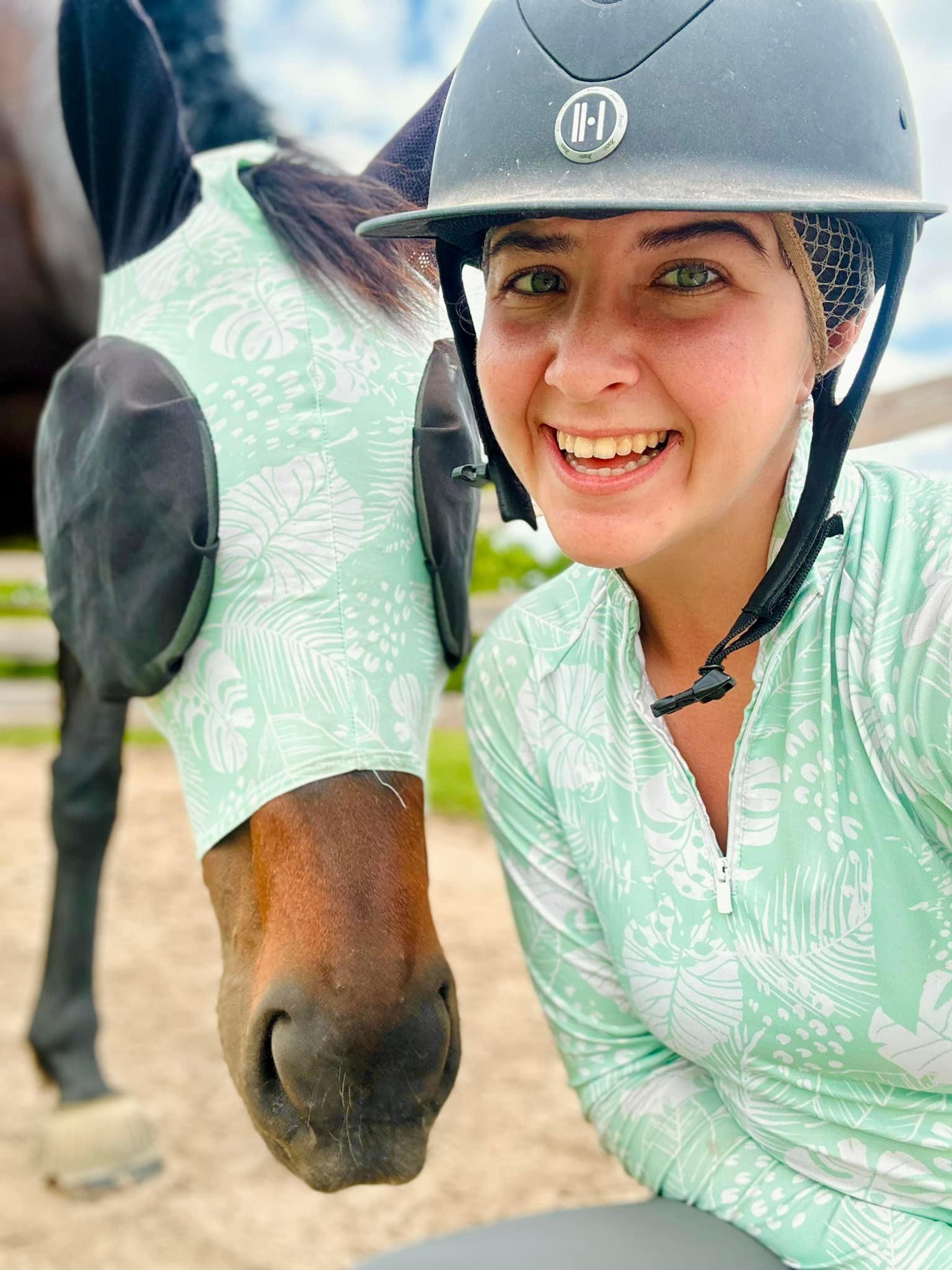
You had your saddle fit six weeks ago. Your fitter gave it a clean bill of health. And now your horse is suddenly uneven behind, not pushing through, and absolutely done with being groomed over the back. Nothing changed — except everything did.
This is one of the most disorienting parts of owning a hypermobile horse. The saddle fit that was correct last month may not be correct today. Not because your fitter made a mistake. Because the horse’s body is not staying the same.
This is not a fringe scenario. It’s one of the most consistent patterns I see in hypermobile horses, and it’s worth understanding what’s actually happening — because if you’re checking the wrong things, you’ll miss it every time.
What “Hypermobile” Actually Means for Back Shape
A hypermobile horse is not just a flexible horse. Hypermobility in this context means the passive stabilizing structures — the ligaments, joint capsules, and connective tissue that hold a shape when the muscles aren’t working — don’t do their job reliably. The horse has to actively stabilize movement that a more conventional horse would stabilize passively.
When those stabilizing systems fatigue, or when the horse is in a less muscled phase, or when training load shifts, the back changes shape. Not dramatically — we’re not talking about a different horse every week — but enough that a panel that sat flush a month ago now bridges, or a gullet that cleared the spinous processes now sits close to them on one side.
Hypermobile horses tend to swing between two back shapes depending on their state of stability:
Dropped and long: The topline loses tone, the back softens, the longissimus flattens. A saddle that fit when the horse was working consistently and carrying well will now feel too wide and may rock or bridge.
Braced and shortened: The horse recruits accessory muscles to compensate for instability. The back hardens, the topline tightens unevenly, and the saddle that fit the working horse may now put pressure where it didn’t before.
Neither of these is a training failure. Both are predictable patterns in hypermobile horses. The mistake is assuming the saddle is static when the horse isn’t.
The Signs to Watch Between Fitter Visits
You don’t need to be a fitter to catch early signs. You need to develop a consistent eye and hands-on protocol.
Back symmetry check — before every ride. Stand behind your horse and look at the longissimus bulk from the quarters forward. Is one side noticeably flatter or more raised? This asymmetry changes in hypermobile horses faster than in conventional horses. If you’re seeing differences side-to-side that weren’t there before, that’s your first flag.
Panel contact — static. Place the saddle on without the girth. Slide a flat hand under each panel from front to back. You’re feeling for even pressure and consistent contact. A bridge (contact at front and back of the panel but air in the middle) means the back has dropped. A tight fit over the cantle that wasn’t there before often means the horse has braced and shortened.
Sweat patterns — after a moderate work session. Pull the saddle immediately after you dismount and look at the sweat pattern. Even pressure across the panels leaves an even sweat mark. Dry spots in the middle of the panel indicate bridging. Dry spots at the front of the panel only may indicate pressure there — the hair dries last where the most heat is concentrated. A perfectly symmetrical sweat mark is what you’re looking for. Any time the pattern changes significantly from what’s been normal, that’s worth logging.
Horse behavior under saddle — the early warning system. The hypermobile horse who is saddle-uncomfortable shows it subtly at first: a little more tension in the transitions, slightly less push through, maybe a flick of the ear when you first sit. These horses rarely have dramatic explosive reactions. They fade. Or they tighten through the back in a way that feels like evasion but is actually pain management.
If you’re not sure what you’re feeling, this is actually a great case for audio lessons you can play while you ride — working through a structured feel checklist in real time can help you distinguish between a training problem and a fit problem.
How Often Hypermobile Horses Actually Need Re-Fitting
Here’s my honest answer: at minimum twice a year, but realistically quarterly if the horse is in active work and going through any muscling changes.
For context, a conventional horse in moderate work might hold a fit for 12-18 months. I’ve seen hypermobile horses need shim adjustments within six to eight weeks of a full flocking or foam adjustment — not because the fit was wrong, but because the horse’s back responded to training and changed shape.
This is especially true during:
- Coming back into work after time off. The topline drops during a lay-up, then rebuilds. The saddle that fit the fit horse does not fit the fresh horse.
- Major training load changes. If you’ve gone from three rides a week to five, or added significant collection work, the back musculature will change. Sometimes quickly.
- Seasonal weather shifts. This one is underappreciated. Horses who are stiff and compensatory in the body during cold or wet stretches often hold a different back shape than they do in summer. Here in Aiken, we also see it in the opposite direction — the heat and humidity of late summer can affect how well horses are moving and therefore how they’re carrying through the back.
What to Tell Your Fitter
The more information your fitter has, the better the outcome. Hypermobile horses benefit from fitters who understand that the goal isn’t just getting the fit right today — it’s choosing a saddle system that has enough adjustability to move with the horse.
Tell your fitter:
- Whether your horse has been recently diagnosed or suspected hypermobile, and whether you’re doing stability-focused training
- What the training load has been in the weeks leading up to the appointment
- What you’ve noticed in sweat patterns and behavior
- Whether the horse has had any body work recently (fascia and muscle work can temporarily change back shape)
A fitter who understands hypermobility will build in a follow-up appointment at six to eight weeks rather than defaulting to six months. If yours doesn’t offer that proactively, ask for it.
The Bigger Picture
Saddle fit for hypermobile horses isn’t a problem you solve once. It’s an ongoing diagnostic conversation between you, your fitter, and your horse’s body. The riders who manage these horses well are the ones who develop consistent observational habits — same checks, same sequence, logged so they can see patterns over time.
It’s less glamorous than training progress. But getting the saddle right is one of the highest-leverage things you can do for a hypermobile horse’s ability to actually build the stability and strength they need. A horse working in a poorly fitting saddle is bracing through the back instead of recruiting the deep stabilizers. You can do all the right exercises and still be fighting that if the fit is off.
Your saddle doesn’t know your horse changed. You have to.
If you’re working through saddle fit questions as part of a broader hypermobility program and want eyes-on help, I work with riders in clinics and lessons here in Aiken and on the road. You can reach me at /contact — I’d love to help you build a clearer picture of what your horse needs. And if you want to go deeper on the hypermobile horse in general, the topic comes up regularly on The Elevated Equestrian podcast, where I break down the science and the practical training approach together.