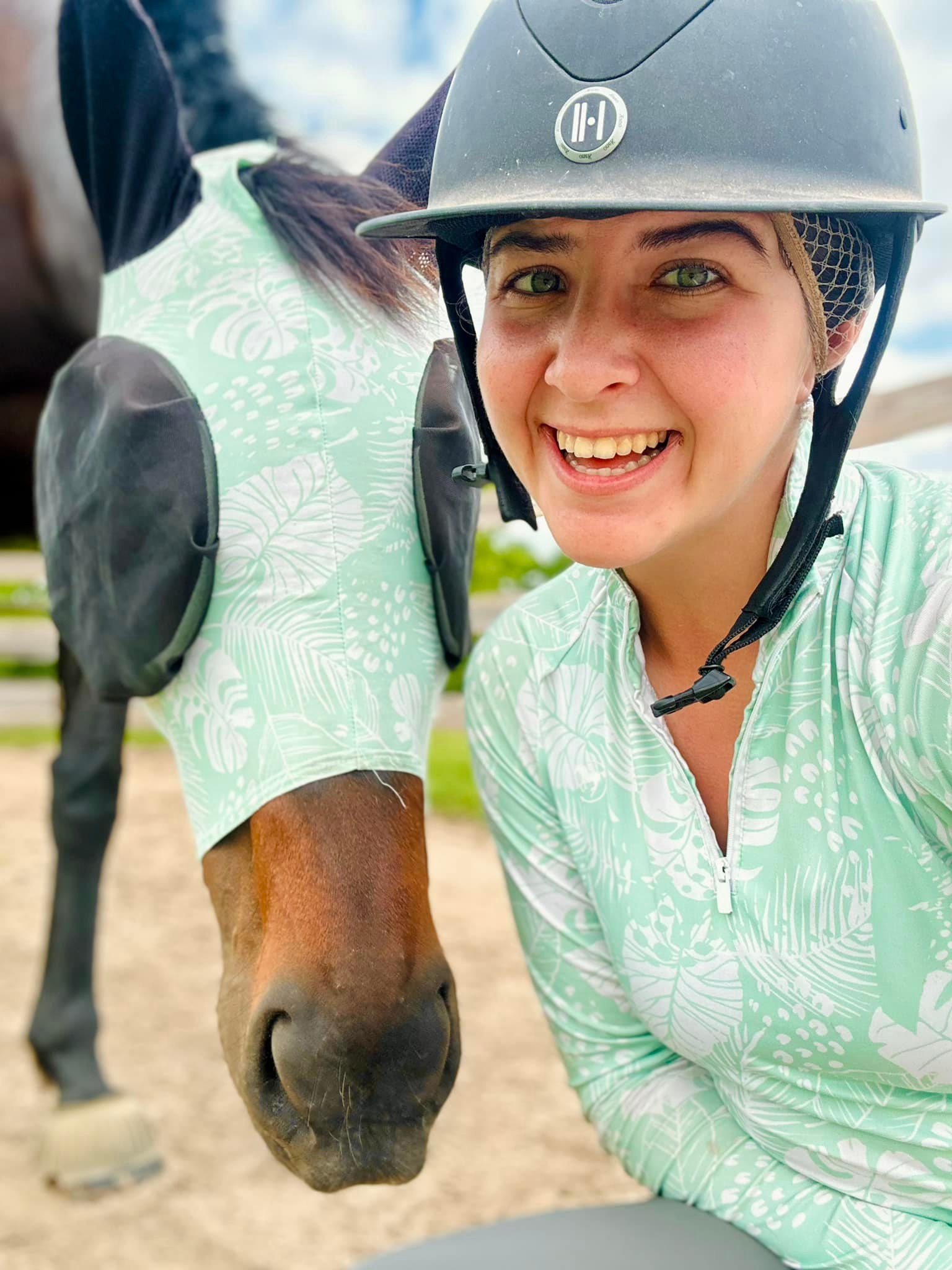
He came out of six weeks of turnout looking round and happy. By week three of riding, his back looked worse than the day you pulled his shoes. The withers look sharper, there’s a dip behind the saddle that wasn’t there in August, and the trot that felt so floaty in the field now feels like you’re sitting on a hammock.
The time off didn’t do that. The way he came back did.
This is the season for it. The fall events are wrapping up, and a lot of horses are heading into a planned break or just coming off one. If you have a hypermobile horse, how you handle the next month matters more than anything you did all summer.
Why the Loose-Jointed Horse Loses Topline Differently
Every horse detrains during time off. The hypermobile horse loses more, and loses the most important part first.
A tightly built horse has ligaments and connective tissue that hold his structure together when his muscles aren’t working hard. The nuchal and supraspinous ligament system, the joint capsules, the fascia: in a normal horse, these act as passive backup. In a hypermobile horse, that backup is lax. His muscles hold his frame together, and the passive tissue only helps a little.
So when he stops working, he doesn’t just lose fitness. He loses the deep postural muscles: the multifidus along the spine, the thoracic sling muscles that lift his chest between his shoulder blades, the small stabilizers around the hip and stifle. Those were doing the job his ligaments can’t.
The field doesn’t rebuild them. Grazing posture, trotting to the gate, and the odd buck don’t load the stabilizers in any organized way. He comes back with his big movers (the muscles that propel him) mostly intact and his stabilizers well behind. That mismatch is the whole problem.
The Mistake Almost Everyone Makes: Fitness First
The standard return-to-work plan is built around cardiovascular fitness and soundness. Walk for two weeks, add trot sets, add canter, add hills, and get him “fit” again. That plan is fine for a horse whose structure holds itself together.
For the hypermobile horse, it’s backwards.
When you ask a horse with weak stabilizers to trot for ten minutes, he doesn’t fail politely. He finds another way to stay upright. He hollows and lets his back sag between the withers and croup. He braces through the underside of his neck. He widens behind, because a wide base of support is more stable than an engaged one. He gets the fitness work done, and every stride strengthens the wrong pattern.
Three weeks later, his heart and lungs are fitter. His topline is worse. He’s also learned a fresh compensation you’ll spend months undoing.
Stability comes first. Fitness gets built on top of it, not the other way around.
Weeks One and Two: Posture Over Mileage
The first two weeks should be boring to watch and hard on your concentration.
- Walk, but walk with intent. Twenty to thirty minutes of marching, rhythmic walk with his neck out of the brace and his back swinging. Not a loose-rein meander. Ask for a soft, honest contact and a neutral spine: neck neither jammed up nor dumped on the forehand, withers lifting slightly as he steps under.
- Walk-halt-walk transitions. Ten to fifteen per session. You want a halt where he stands square without leaning on your hand, then steps off with his hind leg first. Each one asks the stabilizers to organize him.
- A few steps of rein-back. Three or four slow, diagonal steps, a couple of times a ride. It’s one of the most efficient ways to wake up the abdominal and thoracic sling muscles without adding speed.
- Ground poles at the walk. Three to five poles spaced about 3 feet apart, to start. He has to place each foot deliberately, which makes him think about where his limbs are.
- Hills, walked. We’re lucky in Aiken. The sandy footing and gentle grades in the Hitchcock Woods are ideal for this. A slow walk up a long, gradual incline does more for a hypermobile horse’s topline than any trot set. Walk down even slower; going downhill is eccentric loading, and it’s hard work for him.
Shorter is better here. Twenty-five focused minutes beat fifty sloppy ones every time.
Weeks Three and Four: Short Trot Sets and Honest Quitting
Now you can add trot. Keep the sets short (two to three minutes) with walk breaks between them. The trot set ends the moment his posture starts to go, not when the timer says so.
Learn what “going” looks like on your horse. The usual tells:
- Tempo quickens without you asking.
- The base of the neck drops and braces, or he curls and hides behind the vertical.
- You feel him get wider behind, or the hind feet stop tracking up.
- The contact goes heavy in one hand, usually the inside.
- The trot loses its swing and starts to feel flat and quick.
When you see any of those, walk. Let him reorganize. Pick up the trot again only when the walk is good again.
This is also where many hypermobile horses come back stiff, which confuses people. Riders expect the loose horse to feel loose. But a horse without stabilizing strength often braces to create stability he doesn’t have. He gets rigid through the back and leans on the inside shoulder, and that bracing feels like stiffness under you. Don’t try to stretch it away. Give him a better option.
Neutral-spine walk and trot, a few steps of shoulder-in with very little angle, leg yield, and frequent transitions will loosen the brace by giving him a stable way to move. If you want someone in your ear while you ride it, the “Unlocking the Back of a Stiff Horse” ride-along walks through this exact suppling sequence. It’s built for the horse who braces and leans on that inside shoulder, and it’s sixteen minutes, which fits this stage of the return.
Weeks Five Through Eight: Lateral Work, Then Canter
Once he can hold a decent trot for three or four minutes without falling apart, you can start building.
Lateral work stays small. Shoulder-in at a modest angle, leg yield across half the arena, haunches-in for a few strides. For the loose-jointed horse, a large angle just lets him bend through the joints instead of stepping through with his body. Less angle, more honesty.
Transitions become your main strength tool. Trot-walk-trot, trot-halt-trot, and within-gait adjustments. Each transition asks him to stabilize, shift his balance, and reorganize. Fifty good transitions in a week will do more for his topline than three long hacks.
Canter comes in short. One or two large circles each direction, a walk break, and done. Add length only as he can maintain the shape. If he gets strung out or falls on the forehand by the third circle, you’re not ready for three circles yet.
What to Watch Between Rides
The hypermobile horse’s back changes fast, in both directions. During a return to work, check these every week:
- Saddle fit. As he loses topline in the first weeks and then rebuilds it, his saddle can go from fine to bridging to pinching within a month. If you have a shimmable pad, use it, and adjust it as he changes.
- The area behind the saddle. Run your hand along his back behind the cantle. A hollow that deepens week to week means the work isn’t landing where you think it is.
- Standing posture. Watch how he stands in the crossties. A horse who parks out behind or rests a hind leg constantly is still looking for passive support he doesn’t have.
- His attitude about the work. A horse who gets sour or girthy in week three is often telling you the sets are too long for his current strength.
You’re Coming Back Too
Your horse isn’t the only one who had time off. Your core is softer, your timing is rusty, and your position drifts more than it did in September. Hypermobile horses are very sensitive to rider imprecision. A seat that’s a half-beat behind or a hand that braces when you get tired sends him right back into compensation.
Ride shorter and ride cleaner. If you can only stay precise for thirty minutes, that’s the length of your ride. That rule matters even more for his topline than for yours.
If you want structure for those sessions, the audio lessons in Sam’s ride-alongs are made to play while you ride. They work well for return-to-work rides, when it’s tempting to drift into autopilot. I’ve also covered the stability-first approach in more depth on The Elevated Equestrian podcast, including why “fit” and “strong” aren’t the same thing for these horses.
The Bottom Line
Time off doesn’t wreck a hypermobile horse’s topline. Coming back into fitness work before the stabilizers are ready does. Build posture before mileage, quit trot sets the moment the shape goes, keep lateral work small, and let transitions do the heavy lifting.
Get the first three weeks right, and the rest of the return goes much more easily.
Everything in this post comes from a larger framework I’ve been building for years: how to train, condition, and keep the loose-jointed horse sound. It’s going into my book on the hypermobile horse. If you want first access when it’s ready, plus a free lesson to start with now, join the waitlist here.