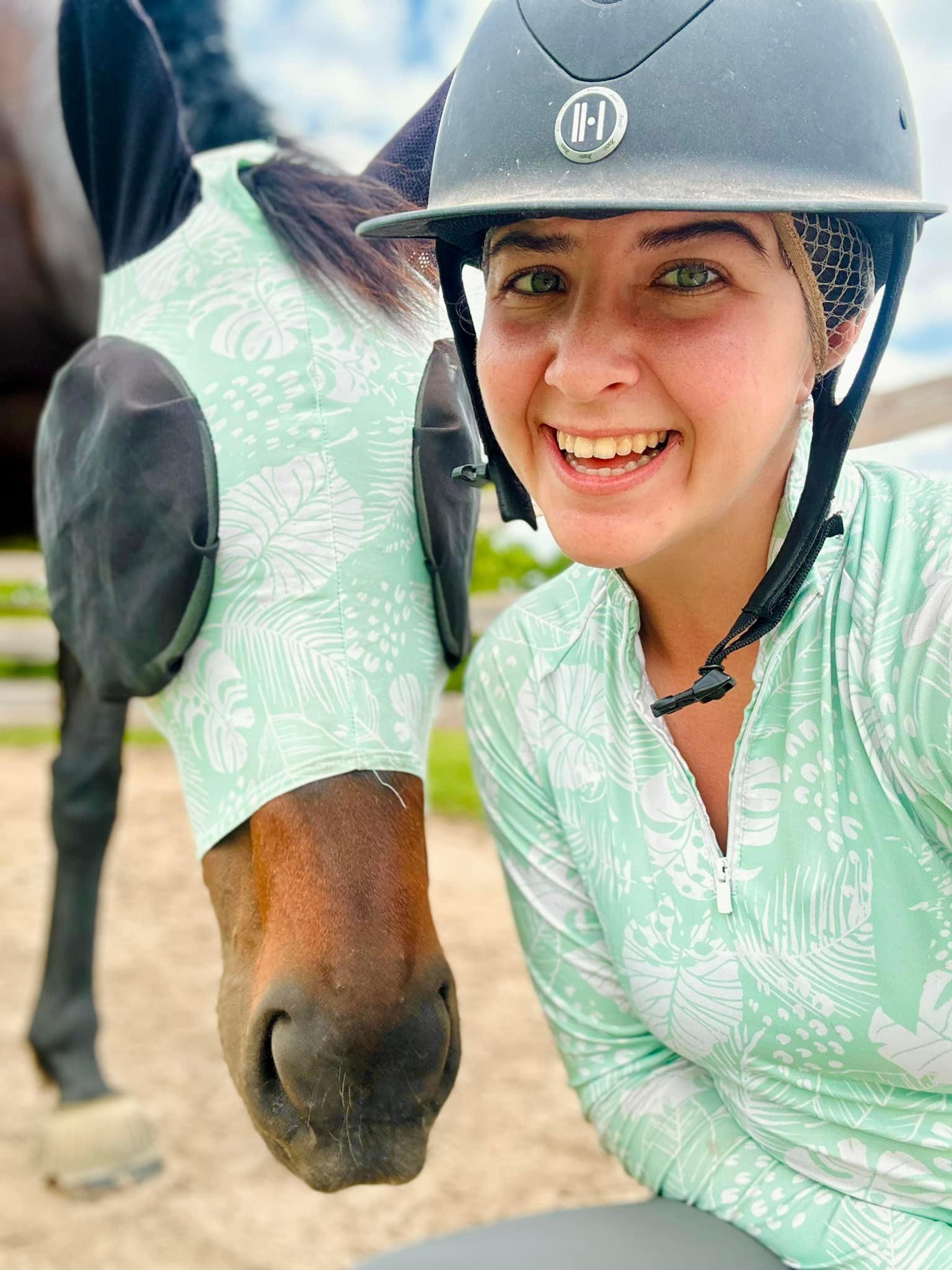
Aiken is one of the most horse-dense towns in the United States. On any given Tuesday morning you can drive past six different trainers giving lessons, watch three different nationalities schooling horses over fences, and hear three different training philosophies argued with complete conviction before 9 AM. That density is one of the best things about living and training here. It is also one of the most disorienting.
If you’ve moved to Aiken, or you’re here for a winter season, or you’re simply looking for a trainer for the first time, the sheer volume of options does not make the decision easier. It makes it harder. And the polite, small-community nature of the horse world here means most people won’t tell you what you actually need to know: qualified on paper does not mean right for you.
Here’s how to actually figure it out.
Credentials Are a Starting Point, Not a Conclusion
Yes, look at credentials. USDF certifications, Pony Club ratings, eventing competition records, coaching certificates — these matter because they tell you someone has been evaluated by an outside body and met a standard. That’s not nothing.
But Aiken has a lot of people with impressive credentials who are not good fits for every rider or every horse. A Grand Prix dressage trainer who has produced consistent upper-level results may be exactly the wrong person for a nervous amateur who needs confidence work before they need collection. A big-name event trainer with a barn full of young professionals might not have the bandwidth or the patience for a horse-owner who needs a lot of explanation.
Credentials tell you what someone has done. They don’t tell you how they teach, who they’re actually good with, or whether their approach matches what your horse needs right now.
Watch Before You Commit
This one is non-negotiable. Go watch a lesson before you book one.
Most trainers in Aiken will allow this if you ask respectfully. Some actively encourage it. Watch how the trainer interacts with riders at multiple levels — not just the good ones. How do they handle a horse that spooks? How do they respond when a rider makes the same mistake three times in a row? What language do they use? Do they explain the why or just issue corrections?
Specifically, pay attention to how they handle moments of tension — in the horse and in the rider. A trainer who escalates when the horse escalates is not someone whose philosophy is rooted in nervous-system understanding. A trainer who shuts a rider down when she asks a question is not someone who will build your confidence.
Watch at least two sessions with different riders if you can. You’ll learn more in those forty minutes than from any website or reputation.
Know What Problem You’re Actually Trying to Solve
This is where most riders go wrong before they even start looking. They search for “eventing trainer Aiken” or “dressage trainer Aiken” — discipline-based, which makes sense — but discipline is not the same as problem.
Ask yourself: what is the actual situation with your horse right now?
If your horse is hypermobile and struggles with straightness and proprioceptive stability, you need a trainer who understands how to work with that body type — not just someone who will drill the horse for contact. If you’re a rider coming back after a fall, you need someone who understands nervous-system regulation and knows how to rebuild confidence systematically. If your horse is strong and you’re struggling with control on cross-country, that is a specific technical problem with specific biomechanical solutions.
The trainer who is excellent for the problem you have may not be the most famous name in town. Aiken is full of quiet, deeply skilled people who work out of smaller operations and don’t market themselves heavily. Some of the best work I’ve seen happening here is being done by trainers who have no Instagram presence whatsoever.
Ask About Their Philosophy on Tension and Training
This is a question most riders never ask directly, and it tells you an enormous amount.
You don’t have to use clinical language. You can simply ask: “What do you do when a horse is tense or resistant?” or “How do you approach a horse that’s shutting down?” The answer will reveal the trainer’s underlying framework faster than any resume.
A trainer who immediately talks about pressure and release, about waiting for the horse to soften, about identifying the source of the tension rather than just overriding it — that trainer is working with the horse’s nervous system. A trainer who talks immediately about making the horse obedient, about not letting the horse win, about the horse needing to learn — that’s a different framework. Neither is automatically wrong, but you need to know which one you’re walking into, because they produce very different experiences and very different horses over time.
If you want to go deeper on this topic — specifically the connection between nervous-system state and training outcomes — The Elevated Equestrian podcast covers this territory extensively. It’s worth a listen before you start your trainer search, because it will sharpen the questions you know to ask.
The Aiken-Specific Landscape: What to Know
A few things that are specific to this community and worth understanding.
Winter vs. year-round. Aiken’s horse population swells significantly in winter and early spring. Some of the trainers here are full-time residents. Others are winter transplants who spend summers elsewhere. If you’re looking for ongoing, consistent training — not just a winter season — confirm that the trainer is here year-round and has the bandwidth for a long-term relationship.
Barn culture matters. In Aiken, many trainers are also barn managers, or they operate out of facilities that have a distinct culture. That culture — the clientele, the expectations, the pace, the social dynamics — becomes your daily environment. A barn full of professional riders with twelve horses each feels different from a small, amateur-friendly operation where the owner is present every day. Neither is better; they suit different people. But go visit the barn on a regular morning, not just during a scheduled lesson, and see what you’re actually joining.
Word of mouth is powerful here, but filter it. Aiken is a small community. Reputation travels fast and sometimes without full context. When someone tells you a trainer is “amazing” or “terrible,” ask them to be specific. What was amazing? What were the results? What was the problem? Vague praise and vague criticism are both useless. Concrete details tell the real story.
Don’t assume the most expensive option is the best one. There are trainers in this town charging premium rates because they have premium marketing and premium facilities. There are trainers charging modest rates because they chose to keep their operation small and personal. The price does not predict the quality of instruction.
Red Flags to Take Seriously
- A trainer who will not let you watch lessons. There is no good reason for this.
- A trainer who dismisses questions about training philosophy as overthinking.
- Consistent signs of stress in the horses in the barn — weaving, cribbing, tense toplines, horses that are difficult to handle on the ground.
- A trainer who speaks about their clients’ horses with contempt or blame rather than curiosity.
- Pressure to commit quickly, sign long contracts, or purchase multiple sessions before you’ve ridden once.
- A dismissive response when you describe your horse’s history, body type, or behavioral patterns.
None of these are automatic dealbreakers in isolation. But patterns matter. If you’re seeing several of them, move on.
What a Good First Session Actually Looks Like
You’re not just being evaluated in a first lesson. You’re evaluating the trainer.
A strong first session includes the trainer watching you ride before they ask for much. They’re assessing you and the horse together — how you move, how the horse responds to you, where the asymmetries are, what the horse’s default tension pattern looks like. They’re building a picture before they start prescribing.
You should leave a good first lesson with a clearer understanding of one or two specific things to work on, a sense of the trainer’s explanation style, and — this one is important — a feeling that your horse was seen as an individual, not just a problem to be corrected.
If you leave feeling confused, dismissed, or like you just took a generic lesson that had nothing to do with your specific situation, that’s information. It doesn’t mean you give up on finding the right person. It means that wasn’t the right person.
Aiken’s training community is genuinely world-class. Finding your place in it takes some discernment and some patience, but it’s worth doing carefully rather than quickly.
If you’re looking for a starting point — whether that’s a clinic focused on nervous-system regulation, rider biomechanics, or working with a hypermobile horse — I work with riders at all levels and welcome riders who are in the process of figuring out their next step. You don’t have to have everything sorted before you reach out. Come find me at the contact page and tell me where you are. We’ll figure out whether what I offer is what you need — and if it’s not, I’ll tell you that too.