By mid-June in Aiken, the flies aren’t a nuisance anymore. They’re a management problem.
We’re talking stable flies that bite ankles and legs hard enough to make a tolerant horse stomp and spin. Horn flies clustering on backs and shoulders. Face flies that go straight for eyes and nostrils. Deer flies that show up in the trees along the trail and take a real chunk out of your horse. And the biting gnats — Culicoides — that are small enough to get through a standard fly mask and are a direct trigger for sweet itch in susceptible horses.
If you’re relying on one spray bottle of repellent and calling it fly control, you’re losing this fight before it starts.
Why Single-Product Fly Control Fails Here
The Southeast is genuinely one of the harder environments for fly control in North America. The combination of heat, humidity, sandy soil, standing water after afternoon storms, and year-round mild temperatures means you’re dealing with higher populations and longer seasons than most parts of the country.
The other problem is that different flies require completely different control approaches:
- Stable flies breed in wet, decomposing organic matter — mucky bedding piles, old hay mixed with manure, compost. Repellents have limited effect on them because they bite fast and leave.
- Horn flies and face flies are more susceptible to topical repellents but require consistent, full-coverage application to be meaningful.
- Culicoides gnats are most active at dawn and dusk and in still, humid conditions. They’re small enough to render most fly masks ineffective without a very fine mesh.
- Horse flies and deer flies are virtually impervious to repellent. Physical barriers and traps are your main tools.
Understanding which flies you’re actually fighting is step one. Most riders are throwing money at products that aren’t designed for the specific pest they have.
Build a Layered System, Not a Single Solution
The approach that actually works is layered — environmental management, physical barriers, topical repellents, and traps, all running at the same time.
Layer 1: Environmental Management (The One People Skip)
This is unglamorous work, but it’s the highest-leverage thing you can do. Flies don’t come from nowhere. They come from breeding sites on your property.
- Remove manure from paddocks and stalls at minimum every 48 hours in summer, ideally daily. Manure sitting in heat is a fly incubator.
- Compost or haul your manure pile well away from the barn — at least 300 feet if you have the space.
- Fix drainage issues. Any area where water pools after rain and mixes with organic material is a breeding site.
- Don’t let water buckets or troughs overflow and create wet, shaded ground around them.
- If you have run-in sheds with rubber mats, pull them and clean underneath them periodically. The decomposing material that accumulates there is a stable fly hotspot.
None of this eliminates flies — you’re in the South, adjacent to woods and other properties — but it dramatically reduces what you’re generating on-site.
Layer 2: Physical Barriers
Fly sheets, fly masks, and fly boots. This is where physical protection pays off the most for horses that are sensitive or that you’re turning out for long periods.
Fly sheets in the Carolina summer are a tradeoff. A properly vented mesh fly sheet protects the body from stable flies and sun, but you need to check body temperature. On a horse that runs hot or has any history of anhidrosis, a fly sheet in 95-degree heat with no breeze is a stressor. Know your horse.
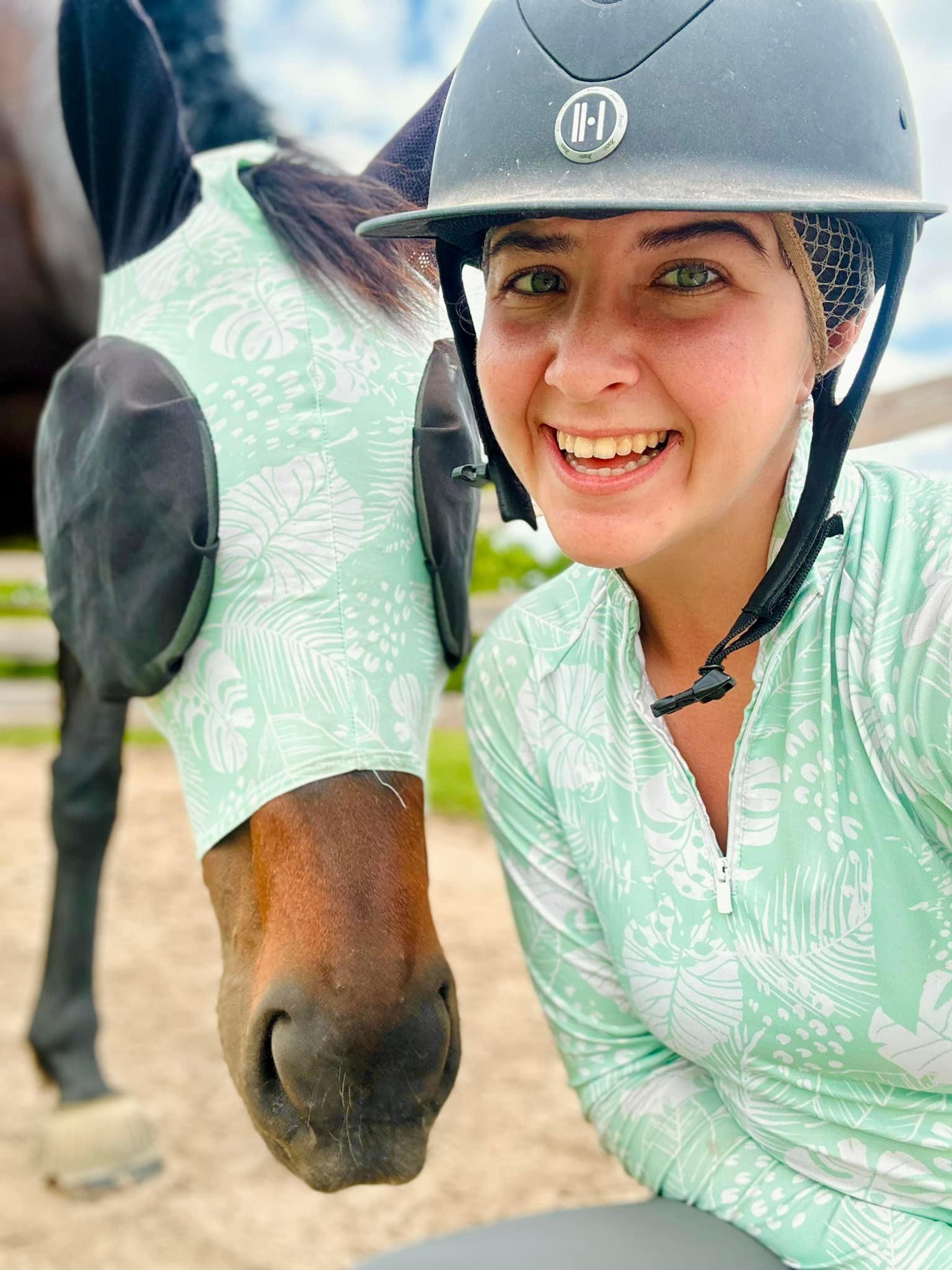
Fly masks need to actually fit and actually be fine enough mesh to matter. A loose mask that gaps at the edges is just decorative. For horses that deal with Culicoides gnats around eyes and ears, look for masks with ear covers and very fine mesh — standard mesh doesn’t stop gnats.
Fly boots for the lower legs are one of the higher-value purchases for horses that stomp heavily, as excessive stomping on hard ground is a real cause of soft tissue fatigue in the lower limb over the course of a summer. If you want a breakdown of what actually stays on in hot, active turnout, I have gear reviews over at /blog that go into specific products.
Layer 3: Topical Repellents — Applied Correctly
Topical repellents work, but most people under-apply them or apply them too infrequently. A quick mist down the barrel once in the morning is not doing much by 2 PM.
A few principles:
- Pyrethrins are effective but break down quickly in heat and sunlight. They need to be reapplied every few hours for real coverage.
- Permethrin-based sprays are more durable and are the better choice for horses in all-day turnout. They can be applied to the coat and allowed to dry. They’re not safe for cats, which matters if you have barn cats — store carefully.
- Fly sprays with oil-based carriers tend to adhere longer than water-based formulas in high-heat conditions.
- For face and ear areas, apply to a cloth and wipe on rather than spraying near eyes and nostrils.
Concentrate-to-water ratio matters. Read the label. Most concentrates are being diluted too heavily because people are trying to stretch product.
Layer 4: Traps and Baits
Horse fly and deer fly traps (the ball-style or sticky-trap designs) are genuinely effective if placed correctly. They work on visual attraction — the flies are drawn to a large, dark, moving or heat-absorbing object. Placement near shaded trail entrances or along fence lines where deer flies are active is more effective than putting them in the center of a sunny paddock.
For stable flies specifically, sticky traps placed near the manure pile and stall areas can reduce populations meaningfully over a few weeks.
Feed-through fly control products — IGRs, or insect growth regulators, added to grain — work by passing through the horse’s digestive system and disrupting fly larvae development in manure. They’re not a standalone fix, but as part of a full program they can reduce stable fly and house fly populations on-farm. They don’t affect biting flies that come in from outside your property.
The Repellent Application Protocol I Actually Use
For horses going out in the morning:
- Permethrin spray on legs, belly, barrel, and haunches. Let it dry before adding a fly sheet.
- Pyrethrin-based spray or wipe-on product for the face and ear area.
- Fly mask on with proper fit confirmed before turnout.
- Fly boots for horses that stomp or have sensitive lower legs.
For horses being ridden:
- Repellent goes on before tacking up, not after. You want it on the skin and coat before compression from the girth and saddle.
- Reapply to exposed areas — face, legs, under the belly — if you’re doing a long ride or working through the peak afternoon hours.
What About Essential-Oil-Based Sprays?
Citronella, neem, eucalyptus — these show up in a lot of “natural” fly sprays. They’re not worthless, but they’re not comparable to permethrin or pyrethrin in efficacy or duration. If you prefer them for other reasons, that’s a valid choice. Just go in with accurate expectations and reapply frequently.
A Note on Horses with Sweet Itch
If your horse reacts to Culicoides gnats with skin reactions, rubbing, broken mane or tail hair, or patches of thickened, irritated skin along the topline and base of tail — this is its own management problem and the standard fly control protocol isn’t enough. Gnat management requires fine-mesh coverage, stabling at dawn and dusk, fans in the stall to create airflow gnats can’t fly in, and in some cases veterinary-prescribed antihistamines or steroids during peak season.
I talked through nervous-system responses to chronic skin irritation and behavioral changes related to discomfort on a recent podcast episode — because sweet itch horses often develop behavioral patterns that get misread as training problems. Worth a listen if you’re dealing with a horse that seems reactive and no one can figure out why.
The Bottom Line
There is no single product that solves a Carolina summer fly problem. Anyone selling you that is selling you convenience, not efficacy.
The system is environmental management plus physical barriers plus topical repellents applied on a realistic schedule plus traps where appropriate. It takes real time investment at the start of the season to set it up, and then consistent daily habits to maintain.
The horses that are comfortable in turnout, not wearing themselves out stomping and swishing, not getting their faces rubbed raw from irritation — those horses come in to be worked in a significantly better state than the ones who’ve spent six hours fighting flies. That difference shows up in your rides. It shows up in their body condition over the summer. It’s not a small thing.
If you want to dig into specific fly sheet and fly mask products — what holds up to actual hot-weather turnout, what mesh size actually stops gnats, what fly boots stay on — I keep updated gear breakdowns at /blog. Start there before you spend money on something that fails by August.