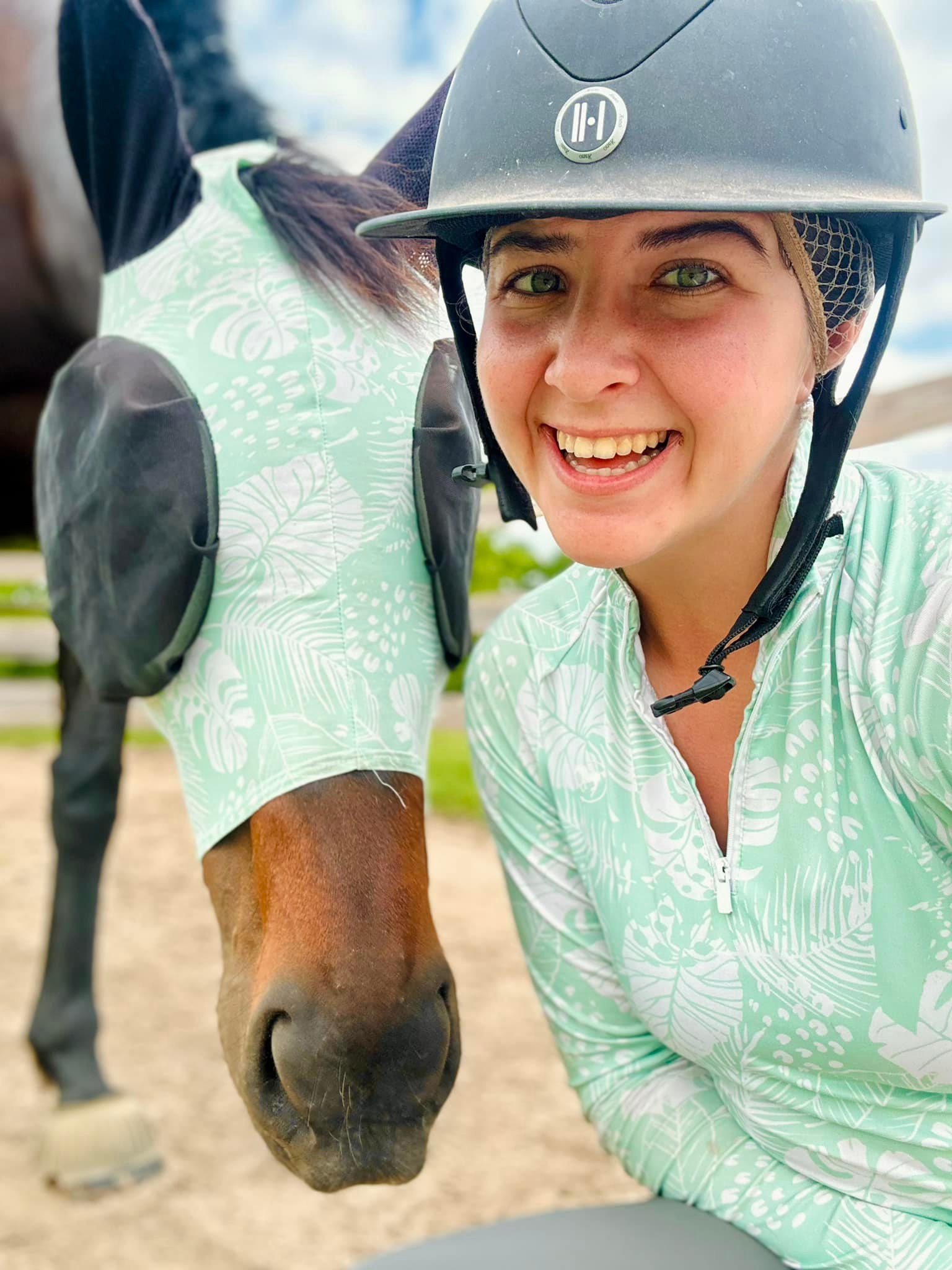
Fall cross-country schooling is the best riding of the year, and it is hard on pads. The ground is soft, the water complex is full, and every horse comes back with mud splashed to the girth line. That splatter does not stay on the outside. Grit works under the panels, winter coats start coming in and trap sweat, and a pad that looked fine at the trailer is sandpaper by the third bank. This post is not about grip at speed. I’ve covered that already. This one is about building a pad setup that survives a wet October.
This post contains affiliate links. If you shop through them I may earn a small commission at no extra cost to you — and you’ll get my reader discount. I only feature gear I’d actually put on my own horses or wear for a full day in the saddle.
Quick Comparison
| Pad | Price | Role in a Muddy-Season Rotation | Best For | Skip If |
|---|---|---|---|---|
| Limited Edition Swamp Pad | from $73 | The pad you don’t mind getting filthy | Riders who need volume for frequent washing | You want a guaranteed restock or a specific fit feature |
| Friction Free Baby Pad (Jump) | $170 | The skin-contact layer for rub-prone backs | Horses that gall or rub when grit and sweat build up | Your horse has never rubbed and budget is tight |
| Cross Country Friction Free | $170 | XC-cut low-friction pad for galloping days | Dedicated XC schooling and run days | You mostly school jumps in the arena |
Why Mud Season Is a Pad Problem, Not a Grooming Problem
People treat the mud issue as a grooming issue: curry harder, brush longer. That helps, but it misses how a rub actually forms on an XC day.
You tack up a clean horse. Then you hack across a wet field, splash through the water, and canter up a slick hill. Fine particles get thrown up and wicked into the pad edges. Sweat turns them into a paste. Meanwhile your horse is working harder than in the arena, with more shoulder and back movement and more saddle oscillation over terrain. Repetitive movement plus grit plus moisture is the recipe for a rub. Fall adds a coat that’s thickening every week and holding dampness longer.
That gives you two jobs. First, have enough clean pads that you never put a gritty one back on. Second, put the right material against the skin on the horses that are prone to rubbing. The three pads below cover both jobs.
Limited Edition Swamp Pad: The Volume Pick (from $73)
I’m going to be straightforward about this one. The Limited Edition Swamp Pad is a fun pick, not a technical one. It’s a limited-edition themed design, and it’s priced in the same tier as the Limited Edition Jump Baby Pad. I’m not recommending it because it does something special under a wet saddle. I’m recommending it because the single most important thing in a mud-season rotation is having enough clean pads, and the name tells you exactly what day it’s for.
My rule for fall XC is one pad per horse per outing, no exceptions. A pad that has been through a water complex does not go back on that horse or any other until it’s been washed and fully dried. If you’re schooling two or three horses on a Saturday and hacking out midweek, the pile builds fast. Cheap-tier pads you aren’t precious about are what make that rule realistic. The alternative is the classic mistake of “it’s only a little damp, it’ll be fine.”
Fit notes: Check the product page for the current cut and size options before you order. Limited runs don’t always mirror the standard line exactly. Whatever pad you use under a jump saddle, it should extend past the panels on all sides so no saddle edge sits on bare hair. Pull it up into the gullet before you girth so it isn’t drawn tight across the withers. That matters more on wet days, when a pad that’s gained weight from moisture can sag and drag.
Who this is for: The rider who needs more pads in the rotation without spending half pad money. Also the barn that wants a muddy-day pad that’s easy to grab and keep separate from the show pile.
Who this is not for: Anyone who needs a guaranteed restock. Limited means limited. If you fall in love with it, buy what you need while it’s available. It also isn’t the answer for a horse that’s already rubbing. That horse needs the next pad.
Friction Free Baby Pad: The Skin Layer for Rub-Prone Horses ($170)
This is the pad doing real work in a muddy season. Ogilvy’s Friction Free line is built from a low-friction material designed for sensitive-skinned horses, rub-prone backs, and high-movement work. That describes most event horses by mid-October.
The Classic Jump Friction Free Baby Pad and the Custom Jump Friction Free Baby Pad both run $170. Go Classic if you want it shipped and on the horse this week. Go Custom if you want your colors and want this pad to be clearly “the sensitive horse’s pad” in a shared barn.
Here is the tradeoff. $170 is more than double a standard baby pad. You aren’t paying for thickness or cushion. You’re paying for the material against the skin. If your horse has never rubbed, never galled, and comes back from wet schooling days with clean, flat hair, you probably don’t need it. A standard baby pad and a strict laundry rule will do.
But if you have the horse who gets a dry, scuffed patch behind the withers or along the back of the panel every fall, this is where your money should go. These horses typically have thin skin, run a little hot, and grow a coat that holds sweat. Fixing a rub mid-season costs you days off, ointment, and a horse that starts flinching at the saddle. Preventing it costs one pad.
Fit and use notes:
- It sits under your saddle, or under a half pad if your setup calls for one, just like any baby pad. It doesn’t change your saddle fit the way a shimmed or cushioned pad would.
- Treat it as the dedicated skin layer for one horse. Don’t rotate it across the barn.
- The low-friction job only works if the surface stays clean. Wash it after every muddy outing. A friction-free pad full of grit isn’t friction-free anymore.
- Look at your horse’s back after every wet ride, not just when you notice a problem. Ruffled or swirled hair in one spot is the early warning sign, before any rub shows.
Who this is for: Rub-prone, thin-skinned, or gall-prone horses. Horses whose fall coat traps sweat. Any horse with a history of saddle-area scuffing during wet months.
Who this is not for: The bombproof, thick-skinned horse with no rub history. Spend that $170 on more volume pads instead.
Ready to try the Friction Free Baby Pad? Use my link and code SAMANTHABAER10 for 10% at Ogilvy Equestrian → https://ogilvyequestrian.com/samanthabaer
Cross Country Friction Free: For the Days You’re Actually Galloping ($170)
If your fall schooling is real cross-country, with fields, banks, ditches, water, and miles of hacking between fences, this is the pad for those days. The Custom Cross Country Friction Free and the Classic Cross Country Friction Free are both $170. Of everything Ogilvy makes, this is the one I’d point any XC rider to first.
The difference from the baby pad is the cut. The baby pad is a jump-shaped skin layer that works for arena schooling and general jumping. The Cross Country Friction Free is designed for the discipline where friction matters most: speed, terrain, and a saddle moving through more range than it ever does on groomed footing. In mud, terrain gets more variable, the horse works harder to balance, and there’s more movement at the saddle. That’s when the material and cut matter together.
How I’d split them: If you mostly jump in the arena and get out to the fields a couple of times a month, the Friction Free Baby Pad covers you. If you’re schooling XC every week this fall, or you have a horse moving up who’ll be doing more galloping, buy the Cross Country version for field days. Use cheaper volume pads, like the Swamp Pad, for hacks and flatwork.
Honest limitations: No pad replaces saddle fit. If your saddle bridges or rocks, a low-friction surface reduces the damage, but it doesn’t fix the cause. If you’re getting rubs in the same spot no matter what’s under the saddle, have your fitter look before you buy more pads. Also, these are the same price as the baby pad, so owning both is a $340 commitment. Most riders only need the one that matches where they actually ride.
If you want the bigger picture on how saddle movement and back function connect, especially for horses whose topline changes through the fall, I’ve talked through the biomechanics on the podcast.
How I’d Build a Muddy-Season Rotation
Here’s the practical setup per horse for a typical fall:
- The sensitive horse: One Friction Free (baby pad or Cross Country, depending on where you ride) as the dedicated skin layer, plus two volume pads for flatwork and hacks.
- The tough horse: Three volume pads, washed after every outing. The Swamp Pad goes in the mix if you want the limited design before it’s gone.
- The horse moving up: A Cross Country Friction Free for field days, plus volume pads for everything else.
The rule underneath all of it: no pad goes back on a horse damp or gritty. Hang wet pads with air on both sides. Brush mud off the horse’s back and girth area before tacking up, not just the visible parts. Check the hair under the saddle after every ride.
The Bottom Line
For muddy fall XC schooling, a single magic pad matters less than having the right layer against the skin and enough clean pads that you never cut corners. The Friction Free Baby Pad is my first buy for any rub-prone horse. The Cross Country Friction Free is the upgrade if you’re out in the fields every week. The Limited Edition Swamp Pad is the fun, affordable way to add volume so your laundry rule holds up through the wettest part of the season.
Ready to try the Friction Free Baby Pad or the Swamp Pad? Use my link and code SAMANTHABAER10 for 10% at Ogilvy Equestrian → https://ogilvyequestrian.com/samanthabaer