It is late November. Your horse has a coat like a teddy bear, the sun is down by the time you finish riding, and forty-five minutes after the last canter he is still standing in the aisle with a damp saddle patch and sweat curled into the hair behind his elbows. You cannot put a turnout blanket on a wet horse. You also cannot stand there until midnight. This is the fall cool-out problem, and every unclipped or partially clipped horse in work runs into it.
This post contains affiliate links. If you shop through them I may earn a small commission at no extra cost to you — and you’ll get my reader benefits. I only feature gear I’d actually put on my own horses or wear for a full day in the saddle.
I solve this with a routine, not a single product. The Rejuvenate SmartScrim is the anchor of that routine. The Rejuvenate SmartHood is an optional add-on for horses who hold sweat and tension through the neck. Here is how I use both, and who should keep their money.
Quick Comparison
| Product | Price | Role in the Fall Cool-Out | Best For | Skip If |
|---|---|---|---|---|
| Rejuvenate SmartScrim | $349.95 | Full-body layer while the horse walks out and dries | Unclipped or trace-clipped horses in regular work who stay damp after evening rides | Your horse is fully clipped and dry in 20 minutes |
| Rejuvenate SmartHood | $179.95 | Neck and shoulder coverage | Horses who sweat heavily under the mane and carry tension through the neck after work | Your horse dries evenly and the neck is never the last area to dry |
Rejuvenate SmartScrim — $349.95 (The Lead Pick)
A scrim is an open-weave sheet. It is not a cooler and it is not a blanket. It sits on the horse as a light layer while air still moves through the fabric, which is exactly what you want on a damp horse in cool air. Too heavy a layer traps the moisture. No layer at all lets a wet coat sit in a 45-degree breeze.
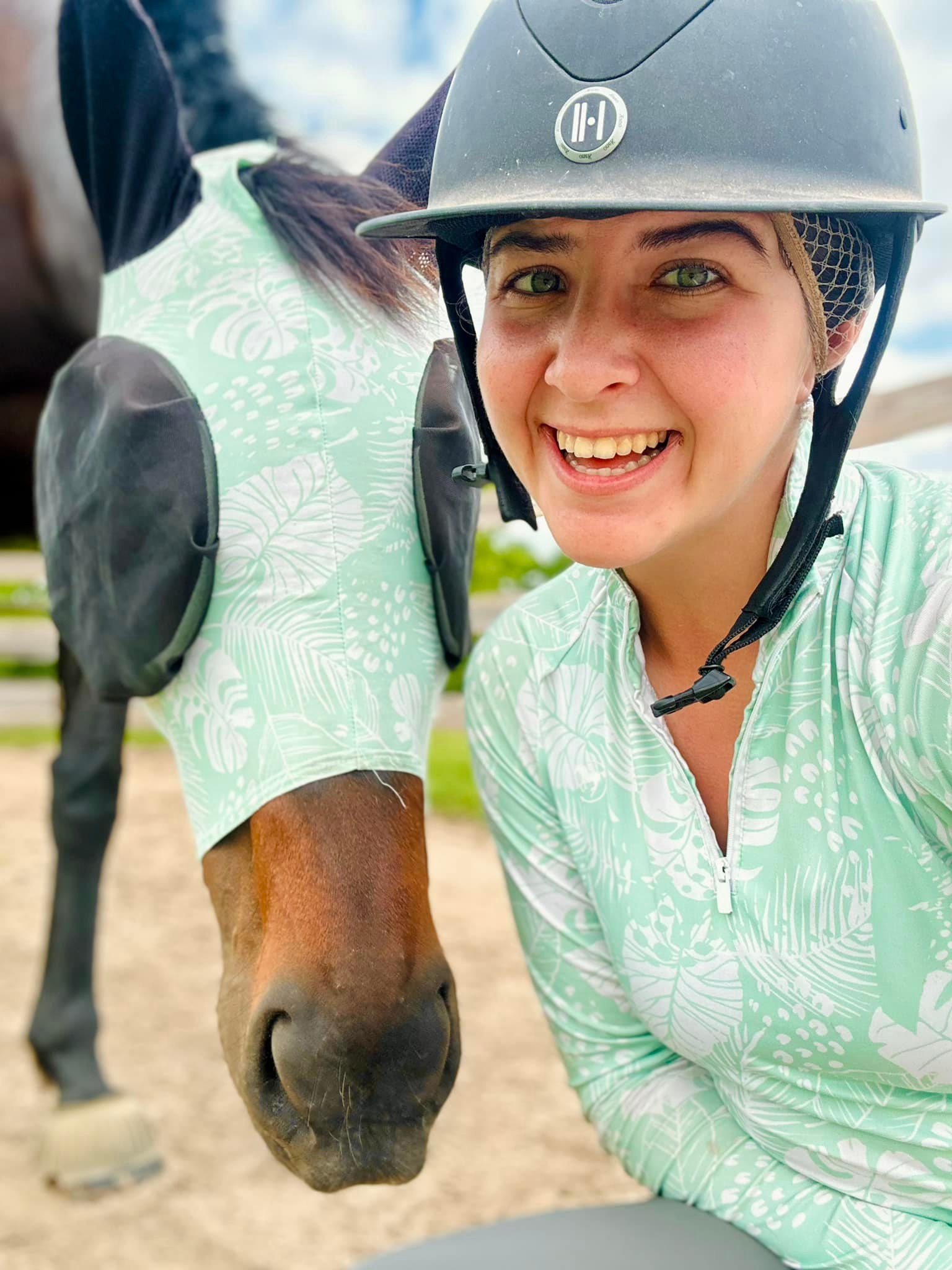
The SmartScrim adds Benefab’s therapeutic fabric to that format. The fabric is designed to reflect the horse’s own body heat back as gentle warmth. On a fall evening, that is the whole point. You get a light, breathable layer that supports comfort and warmth across the back, loin, and hindquarters while the horse walks out, instead of a horse who goes from working-warm to shivering-cold in the space of one hose-off and a turn in the aisle.
What I notice in use. My fuzzy gelding used to stand rigid in the cross-ties after evening rides, with his tail clamped and his skin twitching along the loin. With the scrim on for his walk-out, he walks out with a longer, looser stride and stands quietly afterward. Many riders I work with see the same settle. That is a comfort and behavior observation, not a miracle. But it is the difference between a horse who is waiting out the cool-down and one who is relaxing into it.
Fit and sizing. Measure center of chest to the point of the buttock and check against the size guide on the product page. Do not guess from your turnout-blanket size, because blanket makers size differently. You want the scrim to sit in contact with the back and hindquarters without pulling across the shoulders. Too big and it slides back at the walk. Too small and it binds at the chest when he stretches his neck down.
Honest tradeoffs. $349.95 is real money for something that looks like a sheet. A scrim is also not built to stand in for a wool cooler on a horse who is soaking wet in true cold. On those nights I towel off first and sometimes layer differently. It is also not a turnout piece. It belongs in the barn routine, not the field.
I covered the summer version of this sheet in my post on supporting cool-out and circulation after a hot conditioning ride. The fall use is different. In July you are bringing heat down. In November you are holding comfortable warmth in while a heavy coat dries.
Rejuvenate SmartHood — $179.95 (The Optional Layer)
Look at where your horse is still wet an hour after work. On most fuzzy fall horses, it is under the mane, along the crest, and behind the ears where the bridle sat. The neck has the thickest coat and the least airflow. A full-body scrim covers the back and hindquarters, not the neck.
The SmartHood covers the neck and shoulders in the same therapeutic fabric. It supports warmth and circulation through the area that is slowest to dry. For horses who also carry tension in the neck after work, it becomes part of a recovery routine that encourages that area to soften.
Who actually needs it. Horses with a heavy mane or a thick neck coat. Horses who work in a frame and come back sweaty under the crest. Horses who already show neck and shoulder tightness in your post-ride hand-check. If you are trying to decide between this and the SmartMask for a head-and-poll problem, I broke that down separately. For the cool-out question, the Hood is the one that matters.
Fit note. It should sit snug along the neck without pressing on the withers or rubbing the mane flat in one direction. Check the listing for how it secures, and confirm it sits cleanly with the front of your scrim so the two layers do not bunch at the shoulder.
Skip it if your horse’s neck dries at the same rate as his body, or if you hogged or bridle-path-clipped generously and the crest is not the problem. Buy the scrim first. Add the Hood only if the neck is consistently the last area to dry.
Ready to try the Rejuvenate SmartScrim? Use my link for my reader benefits at Benefab → https://bit.ly/4uhqYoF
My Step-by-Step Fall Cool-Out Routine
This routine is what makes the products worth the money. Without it, you are just putting a nice sheet on a wet horse.
1. Walk under saddle first. Spend ten minutes on a loose rein before you dismount. Let breathing come down before you introduce any cold air or water.
2. Untack and scrape or towel immediately. Scrape off any standing sweat. Then rub hard with a dry towel against the direction of the hair, especially the saddle patch, girth line, and flanks. Lifting the coat lets air in. Flat, wet hair dries slowly.
3. Scrim on, Hood on if needed. Put the layers on while the horse is still warm from work, not after he has started to cool. The goal is to keep comfortable warmth in during the drying window.
4. Walk out 15–20 minutes. Walk in hand or on the walker. Movement plus a breathable layer dries a fuzzy coat far faster than standing still. If you have a few minutes of the hardest work of the season behind you, add a QuickWraps or hock-boot step, as I lay out in my in-work sport horse recovery routine.
5. Check with your hand, not your eyes. Slide your palm under the scrim at the loin, girth, and under the mane. Cool and damp means keep walking. Warm and dry to the skin means you are done.
6. Re-curry, then blanket. Curry the dried sweat marks so the coat lies loose. Then go to whatever turnout or stable layer the night calls for.
7. Don’t forget water. Fall horses still sweat out electrolytes, and many drink less as the weather cools. My electrolytes and hydration post is written for summer, but the “what they actually need” logic applies all year.
I talk about late-season barn routines and how they shift as the coat comes in on the podcast. If you are juggling multiple horses on short evenings, it is worth a listen.
Who Needs the Scrim and Who Can Skip It
Buy the SmartScrim if:
- Your horse is unclipped or trace-clipped and in work four or more days a week.
- You ride after work, when the temperature drops fast.
- He is regularly still damp 30+ minutes after you finish.
- He stands tense, tucked, or twitchy during cool-out instead of relaxing.
Add the SmartHood if:
- The neck and crest are consistently the last area to dry.
- He carries visible tension in the neck after work.
Skip both if:
- Your horse is body-clipped and dry in 20 minutes with a towel and a quick walk.
- You ride midday on mild days and he simply does not come back wet.
- Budget is tight and you already own a breathable cooler. Spend the money on a good clip and a stack of towels first.
One more honest point. If your horse starts sweating heavily with light work, shivers well after he is dry, or acts dull in the cool-out, call your vet. That is not a gear problem.
The Bottom Line
The fuzzy fall horse does not need more gear. He needs a cool-out routine built for a thick coat and short, cold evenings. The Rejuvenate SmartScrim is the piece I build that routine around. It is a light, breathable layer that supports warmth and comfort while he walks out and dries, and it earns its price in a barn that rides after dark five nights a week. The Rejuvenate SmartHood is the smart second purchase for the horse whose neck is always the last to dry.
I am not aware of any sale running right now. If one comes along, the scrim is the piece I would grab first. Either way, it is the purchase that changes your evenings.
Ready to try the Rejuvenate SmartScrim? Use my link for my reader benefits at Benefab → https://bit.ly/4uhqYoF