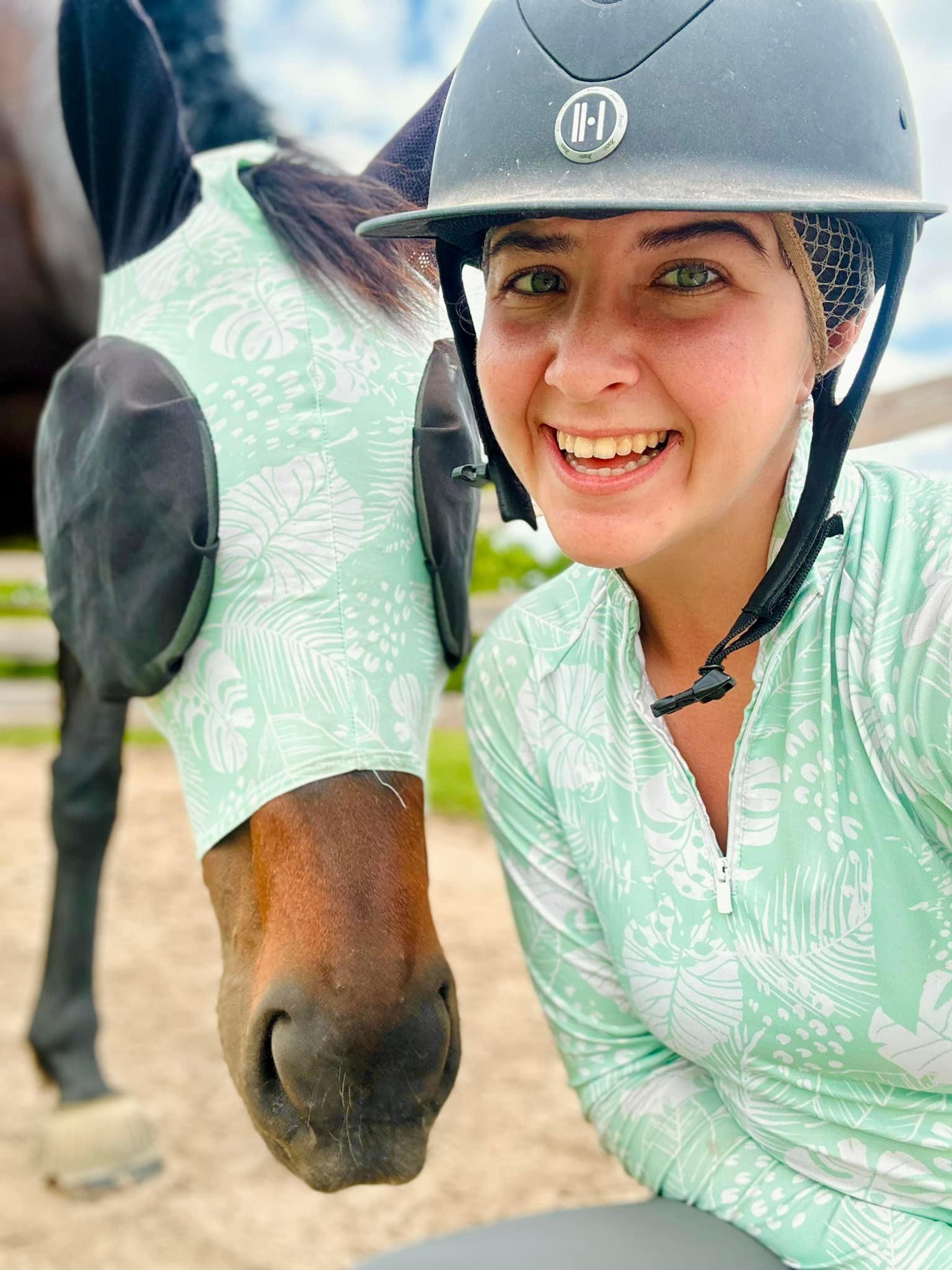
It is July, it is hot, and the flies are relentless. If you have ever tried to keep a horse’s head still in front of a judge while gnats are circling his ears and face flies are landing on his eyelids, you already know that a fly veil is not optional show equipment — it is ring management. The right one keeps your horse’s focus where it belongs, sits clean and square under or over the bridle, and does not look like an afterthought. The wrong one bunches, slips, and pulls your overall picture apart before you even make it to the in-gate. Here is what to look for and where to find it.
This post contains affiliate links. If you shop through them I may earn a small commission at no extra cost to you. I only feature gear I’d actually put on my own horses or wear for a full day in the saddle.
What Makes a Show Fly Veil Actually Work
Before getting into specific picks, it is worth naming what separates a veil that functions in the ring from one that just looks good in the product photo.
Fit over the bridle. A show fly veil has to work with your bridle, not against it. The crocheted or lycra band needs to sit flat behind the ears without displacing the browband or pulling the headstall out of position. If the ear holes are cut too tight, the veil will pull the ears sideways — that reads as tension to the judge, even if your horse is perfectly relaxed. If the ear holes are too loose, the veil migrates backward and looks sloppy within ten minutes of warmup.
Ear coverage without muffling. Show veils in hunter, equitation, and dressage rings are primarily protecting around the base of the ears and across the face — not sealing the ear canal. A horse that can’t hear your aids because a thick fleece ear cap is blocking sound is a horse you cannot ride effectively. Look for a lightweight net or crochet construction that blocks insects without deadening hearing.
Color and presentation. White, black, and navy hold up best under arena lighting and read clean in photos. Patterned or bright-colored veils are fine at schooling shows and can be appropriate in jumper rings, but if you are competing in hunter rounds or equitation, clean and traditional is still the safe call.
Stability through movement. The veil should not move when the horse shakes his head. If it is shifting during the trot, it is going to be fully sideways by the time you canter a long side. Look for adjustable closure systems — most quality veils have a small loop and toggle or a velcro tab that anchors the fit.
Finding the Right Fit on Amazon
Amazon’s fly veil selection is genuinely wide, which is both the advantage and the challenge. The range runs from inexpensive crochet veils suitable for schooling and budget show prep up through imported lycra and diamante options that would hold up at a rated show. You can search across price points and filter by ear style, color, and closure type in a way that brick-and-mortar tack stores rarely allow.
For a search-link fly veil search on Amazon, the terms that surface the most relevant show-specific results are “show fly veil horse,” “horse ear net bridle,” or “dressage fly veil.” If you want a specific color — navy for a hunter division, black for dressage, white for a clean equitation look — add that to the search string. Filtering by average review rating to 4 stars and above also cuts through a lot of the lower-quality imports quickly.
What you are looking for in the listing itself: photos that show the veil on an actual horse under a bridle, a clear description of the ear opening measurement or sizing (full, cob, and pony sizes are standard), and a closure or fit description. Veils without any sizing information or without photos of the product in use are harder to evaluate and higher risk.
Crochet vs. Lycra vs. Mesh: Which Construction for the Ring
Crochet is the classic show veil material. It is traditional, breathable, and holds its shape well in heat. White crochet reads beautifully in a hunter ring. The trade-off is that fine crochet is not going to block small gnats the way a mesh veil will — it is more about aesthetics and moderate fly deterrence than genuine insect barrier.
Lycra or spandex veils have grown significantly in popularity, particularly in the dressage world. They conform precisely to the horse’s head, do not shift, and photograph cleanly. They tend to run warm, which is a real consideration for summer showing. If your horse is heat-sensitive around his head and ears, a full lycra veil in July heat can be counterproductive.
Mesh sits between the two in terms of function. Better insect blocking than crochet, cooler than lycra, though it can look less polished in traditional hunter divisions. For a jumper ring or a training-level dressage test at a schooling show, mesh is perfectly appropriate.
For most summer showing in hunter, equitation, and lower-level dressage, I default to a crochet veil in white or black. It is traditional, it breathes, and it photographs well. Search “show crochet fly veil horse” on Amazon to narrow to that construction type.
Matching the Veil to Your Division
Hunter and equitation: White or navy crochet, positioned neatly behind the ears. The veil should be barely noticeable — if the judge is looking at your fly veil, something has gone wrong. Avoid rhinestone or embellishment in traditional hunter divisions.
Jumper ring: Significantly more latitude here. Color blocking, logo veils, and embellished options are common and appropriate. This is where you can lean into matching your saddle pad set if that is your aesthetic.
Dressage: White is most traditional through the lower levels. Black is also accepted and reads sharply against a dark horse. Rhinestone trim is increasingly common and generally accepted at recognized shows, though check your federation’s current rulebook if you are at the upper levels — rules around equipment ornamentation have evolved.
Western pleasure and western show classes: Western fly bonnets tend to sit differently — they sit lower on the poll and are often fringe-trimmed or embellished. Search “western horse fly bonnet show” specifically rather than “fly veil” to get the right cut.
Ready to find the right fly veil for your show string? Use my link for reader benefits at Amazon → https://www.amazon.com/?tag=samanthabaere-20
Care and Maintenance Between Shows
A fly veil that looks good in the ring is only going to stay that way if you are washing and storing it properly. Crochet veils in particular will yellow and lose shape if you throw them in a hot dryer or leave them damp in your show bag between classes.
Hand washing in cool water with a small amount of gentle detergent, then laying flat to dry, will extend the life of a crochet veil significantly. White veils that have begun to yellow can often be brightened with a short soak in a diluted oxygen bleach solution — not chlorine bleach, which will break down the fibers. Lycra veils are generally machine washable on a delicate cycle in a mesh laundry bag.
I keep a separate small ziplock bag for show veils in my tack trunk — they stay clean, do not get tangled in lead ropes or brushes, and I know exactly where they are when I am rushing to get a horse ready before a class.
If you are looking to dial in your overall show prep routine, the episode I recorded on show day logistics on The Elevated Equestrian podcast gets into the systems I actually use when I am showing multiple horses in a day — fly veil organization included.
The Bottom Line
A fly veil is a small investment relative to the rest of your show prep, and it does real work in the ring. Your horse is more comfortable, his expression stays cleaner, and your turnout holds together through warmup and into the ring. Amazon gives you solid access to the full range of options across price points — from a budget schooling veil you can have delivered before the weekend to a nicer embellished option for a rated show.
Use the search terms I mentioned above to filter by construction type and size, read through the photo sets carefully before you buy, and prioritize sellers who show the veil on an actual horse under a bridle. That one criterion alone will save you from the most common disappointment: a veil that looks fine flat but fits nothing like a real horse’s head.
Ready to outfit your show string before the next class? Shop fly veils and more through my Amazon link → https://www.amazon.com/?tag=samanthabaere-20