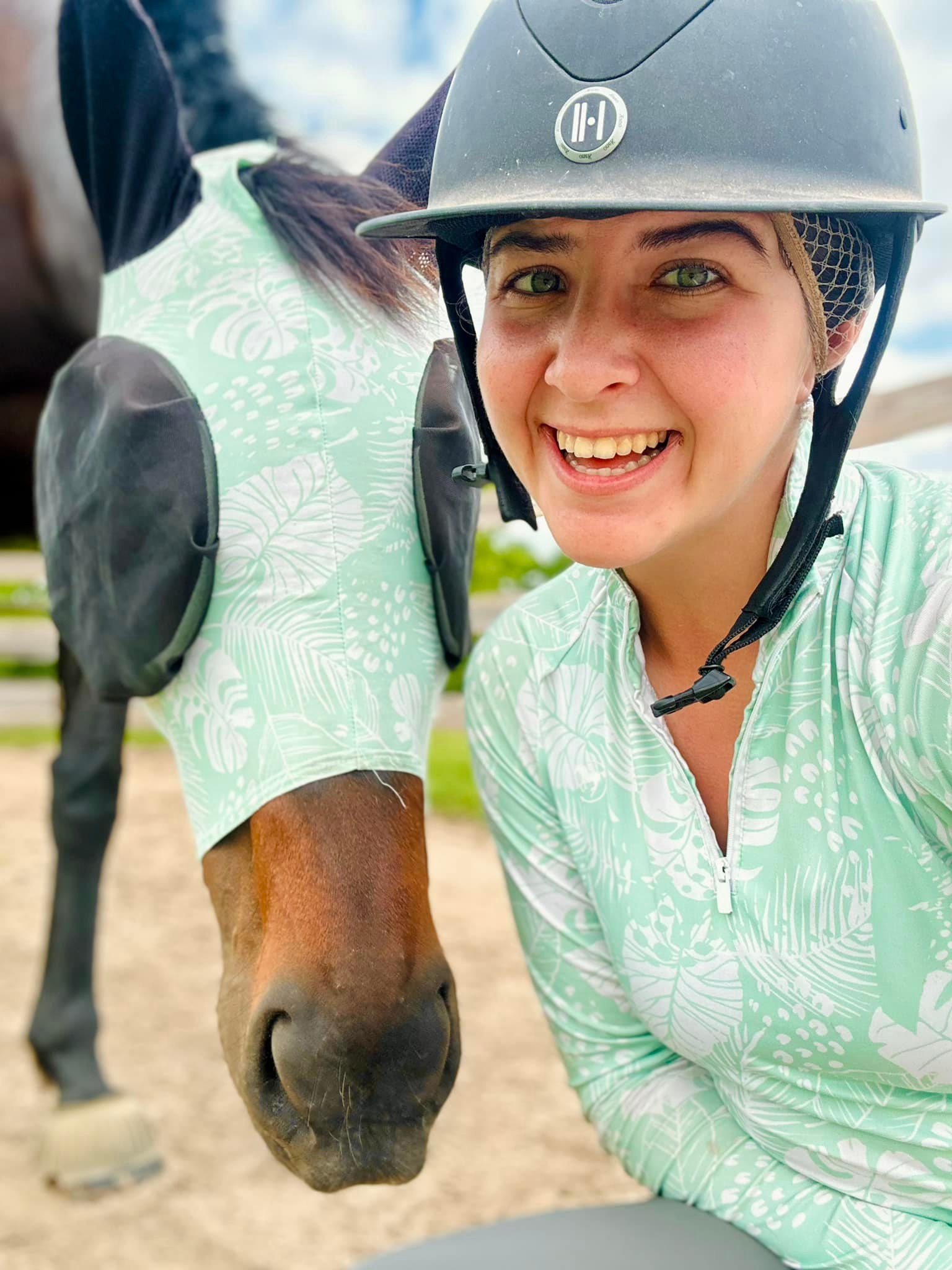
Fall show season puts a lot of miles on a horse. You might haul three hours out on Friday, stall for two nights, school at odd hours, and haul home Sunday night. Then you do it again eleven days later. The riding usually isn’t what wears a horse down. The travel is. Meals shift, water tastes different, forage runs out in the trailer, and a horse who eats well at home starts picking at his hay by the second morning. If your fall calendar runs on the trailer, gut support belongs in the plan before the first haul.
This post contains affiliate links. If you shop through them I may earn a small commission at no extra cost to you — and you’ll get my reader discount. I only feature gear I’d actually put on my own horses or wear for a full day in the saddle.
The Quick Comparison
| Product | From | What it’s for on the road | Best fit |
|---|---|---|---|
| Visceral+ | $89.99 | Foregut and hindgut support through travel, stalling, and routine disruption | Horses with a gut history, or ones that go off feed at shows |
| Performance XL: Electrolytes | $28.99 | Replacing sweat losses from hauling and competing | Any horse that sweats in the trailer or the ring |
| Optimum Probiotic | $19.99 | Entry-level hindgut support | Horses that travel well but get loose manure on the road |
My view: Visceral+ is the lead product for the horse who has shown you he struggles with travel. Electrolytes are close to non-negotiable for any horse that hauls and sweats. The probiotic is the budget pick for the horse who copes well overall.
Mad Barn Visceral+: The Lead Pick for the Travel-Sensitive Horse
Mad Barn’s Visceral+ is their premium pelleted gut supplement. It is formulated to support foregut and hindgut integrity, the mucosal barrier, and immune function. The design decision I like most is that it contains no added vitamins or minerals, and that is deliberate. It isn’t trying to be a balancer, so it sits on top of whatever program your horse already eats without doubling up trace minerals.
That matters on the road. Most show horses are already on a fortified feed or a balancer like Omneity or AminoTrace+. (Feed one of those, not both. They are not meant to be stacked.) Visceral+ adds gut-specific support without disturbing the mineral side of the diet.
Why hauling is a gut problem. A horse’s stomach secretes acid continuously, whether or not he is eating. At home, steady forage and the saliva from chewing help buffer that acid. On a show weekend, the gaps get longer:
- The hay net runs empty two hours into a four-hour haul.
- The horse refuses the show-grounds water.
- Grain gets moved earlier so you can make a 7 a.m. ride time.
The stomach lining sees more acid exposure with less buffering. In the hindgut, abrupt changes in forage, water intake, and stress hormones can unsettle the microbial population. That population depends on consistency, and a show weekend gives it very little.
Real-use notes:
- It’s a pellet. It top-dresses easily, and most horses eat it without sorting it out of the bucket. It is easy to pre-bag into labeled show-weekend baggies, which I care about more than I’d like to admit.
- Start it at home, well before the season. Do not introduce any new feed product the morning you load the trailer. Bring it in gradually per the label so it is part of the normal routine by the first show. Gut support is a consistency product, not a rescue product.
- Feeding amount comes from the label, your vet, or an equine nutritionist. I won’t give you a number, because the right amount depends on your horse.
- It isn’t cheap. At $89.99 and up, it costs more than the entry-level option. I think that’s justified for a horse with a documented gut history. For a horse who travels like a seasoned professional and eats everything in sight, it’s probably more than he needs.
The honest boundary. Gastric ulcers are diagnosed by gastroscopy, not by a rider’s hunch or a supplement’s label. Watch for these signs after a few weekends on the road:
- He goes off his grain.
- He gets girthy.
- He resents leg in the ring.
- He drops weight between shows.
Any of those calls for a vet, and possibly a scope. Many owners feed Visceral+ to support gut health through travel and showing. If your horse is diagnosed with ulcers or anything else, it is an adjunct to the treatment plan your veterinarian directs, never a replacement for it. The same goes for the bute bottle. If your horse gets NSAIDs after a hard weekend, talk with your vet about how that fits with his gut history.
Mad Barn Performance XL: Electrolytes, for the Sweat You Don’t See
Fall weather fools people. It’s 52 degrees at the barn and you assume the horse isn’t losing much. Then you open the trailer after three hours and find him dark with sweat under the blanket you shouldn’t have left on. Trailers trap heat. Horses sweat from the work of balancing and from stress. Add a clipped horse wearing a sheet, the ring warm-up, and a couple of rounds, and the weekend losses are real even with frost on the windshield.
Performance XL: Electrolytes is the electrolyte I’d pick for the hauling horse. The reason is simple. It’s formulated against the actual composition of equine sweat. A lot of commercial electrolytes are mostly sugar with a little salt for flavor. This one is built to replace what the horse is actually losing.
Why it lives in a gut post. Hydration and gut function are linked. Picky drinkers at shows are the norm, and cold fall water makes some horses even less interested. A horse that drinks less on the road has drier gut contents, and impaction colic is the concern most of us carry in the back of our minds on every haul. Electrolytes support the thirst response and help replace sweat losses. They do not guarantee a horse will drink. Colic is always a veterinary emergency, and no supplement changes that.
Real-use notes:
- Get the horse used to the taste at home first. Your first show is the wrong place to find out he dislikes it.
- Always offer plain water alongside. Never give electrolytes to a horse who isn’t drinking without discussing it with your vet.
- Mix into a wet feed or mash rather than giving a concentrated slurry on an empty stomach. Concentrated salt on an empty stomach is a known irritant to the stomach lining. This is where the electrolyte side and the gut side of the program overlap. Your vet can advise on the best approach for your horse.
- Follow the label for amounts. Adjust with your vet based on the workload and how much your horse is actually sweating.
- It’s affordable. At $28.99 and up, this is the cheapest insurance in the trailer.
Ready to try Mad Barn Performance XL: Electrolytes? Use my link for my reader benefits at Mad Barn → https://madbarn.com?ref=18219
Mad Barn Optimum Probiotic: The Budget Pick for the Easy Traveler
Not every horse needs the premium product. Some horses load, haul, eat, drink, and win, then get a little loose in the manure by Saturday afternoon. That is often the hindgut reacting to new hay and a broken routine. It isn’t a crisis.
For that horse, Mad Barn’s Optimum Probiotic is where I’d start. At $19.99 and up, it’s the entry-level gut product. It’s a sensible way to support the hindgut microbial population for a horse whose main travel issue is that the routine changed.
Who it suits:
- Horses who travel well overall but show minor hindgut changes on the road.
- Owners who want to try gut support before committing to the Visceral+ price.
- Horses whose only real stressor is the change in hay and water.
Who it doesn’t suit:
- Horses who go off feed at shows.
- Horses with a scoped gastric history.
- Horses who get uncomfortable under saddle as the season goes on.
A probiotic targets the hindgut. It isn’t designed to support the foregut and mucosal barrier the way Visceral+ is. If your concerns sit in the stomach, this is the wrong tool.
One honest note. If you’re already feeding Visceral+, think twice before stacking extra gut products without asking your nutritionist whether you actually need them. More products in the bucket doesn’t automatically mean more support.
Building the Show-Weekend Routine Around the Bucket
Supplements are the smaller part of this. Most of the gut support on a hauling weekend comes from management:
- Load with a full stomach and a full hay net. Haul on forage, not on an empty stomach. For long hauls, hang a second net.
- Bring hay from home. A sudden forage switch on Friday night is one of the bigger hindgut disruptions you can cause. Bring enough for the whole weekend.
- Bring water from home, or teach a flavor at home. If your horse is a known show-water refuser, solve that in October at home, not in the stalls at 9 p.m.
- Keep meal times as close to home as you can. If ride times force a change, move meals gradually in the days before you leave.
- Use the gaps between shows. A week of turnout and normal routine between back-to-back weekends does more for the gut than any product. Don’t fill that week with lessons just because you can.
I talked through the full show-week build-up on the podcast. The same idea runs through all of it: horses arrive ready when the days before travel are boring and predictable.
Who Should Buy What
- Visceral+: horses with a scoped gastric or hindgut history, horses that go off feed on the road, horses on a long, dense fall circuit, and horses coming off NSAIDs or stall confinement into a travel season. Pair it with your existing balancer.
- Performance XL: Electrolytes: any horse who hauls more than an hour or sweats under a sheet, in the trailer, or in the ring. That covers almost everyone reading this.
- Optimum Probiotic: easy travelers with minor hindgut changes, or owners who want a lower-cost entry into gut support.
- Skip the products and call the vet if: your horse is losing weight across the season, refusing feed, showing colic signs, or getting resentful under saddle. Those are diagnostic questions, not supplement questions.
The Bottom Line
Fall show season is hard on a horse’s gut because travel breaks every routine that keeps the gut steady: forage access, water, meal timing, and calm. Here’s how I’d set up the program:
- Start with management. Hay from home, full nets, a gradual approach to schedule changes.
- Add electrolytes for every horse that sweats on the road.
- Add a gut product matched to the horse. That means Visceral+ for the travel-sensitive horse with a history, and Optimum Probiotic for the easy traveler.
Start everything at home, long before the first haul, and let your vet own anything that looks clinical.
Ready to try Mad Barn Visceral+? Use my link for my reader benefits at Mad Barn → https://madbarn.com?ref=18219