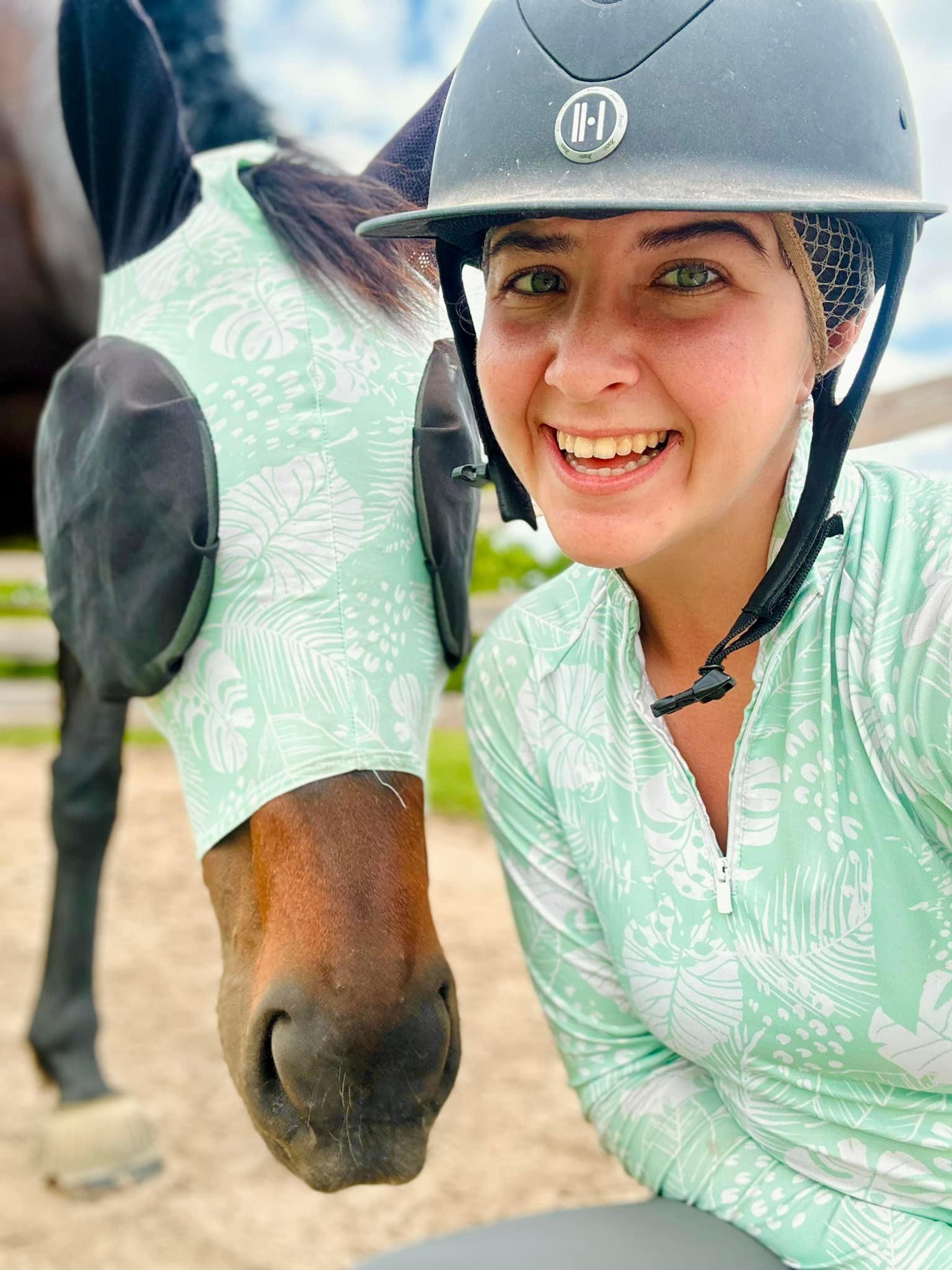
If your horse could talk, what would they say about how they feel under saddle?
Here’s the uncomfortable truth: most horses are telling us exactly how they feel. We’re just not great at listening.
Pain behavior in horses tends to be subtle - so subtle that even experienced riders, trainers, and sometimes veterinarians miss it. We’ve normalized behaviors that are actually signs of discomfort. We call them “quirks” or “attitude” when they might be something else entirely.
Why We Miss the Signs
Horses are prey animals. Evolution taught them that showing weakness makes them vulnerable. So instead of dramatic expressions of pain, they give us whispers - small changes in behavior that accumulate over time until something finally gives.
The problem? We’re pattern-recognition creatures too. If your horse has always done something, your brain stops flagging it as unusual. That head toss? That’s just what he does. The tail swishing? She’s always been opinionated.
But what if those behaviors started for a reason?
The Ridden Horse Pain Ethogram
Veterinary researcher Dr. Sue Dyson developed something called the Ridden Horse Pain Ethogram (RHpE) - a scientifically validated tool that identifies 24 specific behaviors associated with musculoskeletal pain in horses under saddle.
Here’s what makes it powerful: these aren’t vague descriptions. They’re specific, observable behaviors. And research shows that horses displaying 8 or more of these behaviors during a 5-10 minute period are likely experiencing pain.
Sound horses? They typically score 2 or lower.
Let that sink in.
The Markers You Might Be Missing
I’m going to share some of the 24 behaviors, but I want you to read these with your horse in mind. Not with judgment - with curiosity.
Head and Neck:
- Head position changing repeatedly (up/down, side to side)
- Head consistently behind or in front of vertical for more than 10 seconds
- Tilting the head to one side
Eyes and Ears:
- Ears frequently rotating backward or held flat
- Frequent blinking or holding eyelids closed for 2-5 seconds
- An intense, glazed-over stare lasting more than 5 seconds
- Repeatedly exposing the whites of the eye
Mouth:
- Opening and shutting the mouth repeatedly
- Tongue sticking out or moving in and out
- Pulling the bit through the mouth
Tail:
- Tail clamped down or held to one side
- Large, repeated tail swishing (not the occasional fly swat)
Movement:
- Rushed gaits or irregular rhythm
- Abnormally slow gaits
- Hind limbs tracking differently than forelimbs
- Repeated changes in canter lead
- Breaking gait repeatedly
- Stumbling or tripping
- Reluctance to move forward
Extreme Behaviors:
- Sudden spooking or changes of direction
- Rearing
- Bucking or kicking out
”But My Horse Has Always Done That”
I hear you. And that’s exactly why this conversation matters.
When a behavior has been present for as long as you’ve known a horse, it’s easy to assume it’s just who they are. But behaviors don’t come from nowhere. Somewhere along the line, something started them.
The question isn’t whether every head toss means your horse is in agony. It doesn’t. But if you’re seeing clusters of these behaviors - especially 8 or more - it’s worth investigating.
Studies show that horses with lower pain ethogram scores actually place higher in competition. This isn’t about being paranoid. It’s about being thorough.
What to Do With This Information
First, observe without judgment. Watch your horse during a normal ride - or better yet, have someone video you. Look for the specific behaviors listed above. Count them.
If you’re seeing multiple markers:
1. Rule out the obvious first Check saddle fit. Check bit fit. Make sure nothing is pinching, rubbing, or creating pressure where it shouldn’t. Sometimes the fix is surprisingly simple.
2. Talk to your vet Bring your observations. “My horse has always been mouthy” is less useful than “I’ve noticed my horse repeatedly opens and shuts his mouth during collected work, pulls the bit through, and frequently shows the whites of his eyes.”
The Equine Pain and Welfare Assessment (EPWA) app can help you document these observations in a format that’s useful for your veterinary team.
3. Consider the whole picture Pain behavior can also show up during non-ridden activities. Watch how your horse moves in turnout, how they stand, how they eat. Look for patterns.
4. Trust the process Identifying potential issues doesn’t mean something is catastrophically wrong. It often means catching a problem early - before low-grade lameness becomes high-grade lameness.
Why This Matters Beyond Your Horse
Here’s the thing: our sport has a welfare problem. Not because most riders don’t care - most care deeply. But because we’ve inherited a culture that doesn’t always have the best tools for recognizing discomfort.
When horses can’t tell us they’re hurting in words, we need to get better at reading what they ARE telling us. Research tools like the RHpE are helping shift that conversation from “my horse is being naughty” to “my horse might be trying to tell me something.”
This is where the sport needs to go. And it starts with each of us being willing to look honestly at our own horses - not to feel guilty, but to do better.
The Takeaway
Your horse is communicating constantly. The question is whether we’re paying attention.
Watch your horse this week. Really watch them. Not to diagnose anything, but to notice. What do you see?
If you’re curious about building your horse’s comfort and suppleness from the inside out, check out my From Stiff to Supple course - because a comfortable horse is a willing partner.
And if you want to dive deeper into the science of how horses think and feel, start with the Dr. Andrew McLean episode of the podcast. It’ll change how you see training.