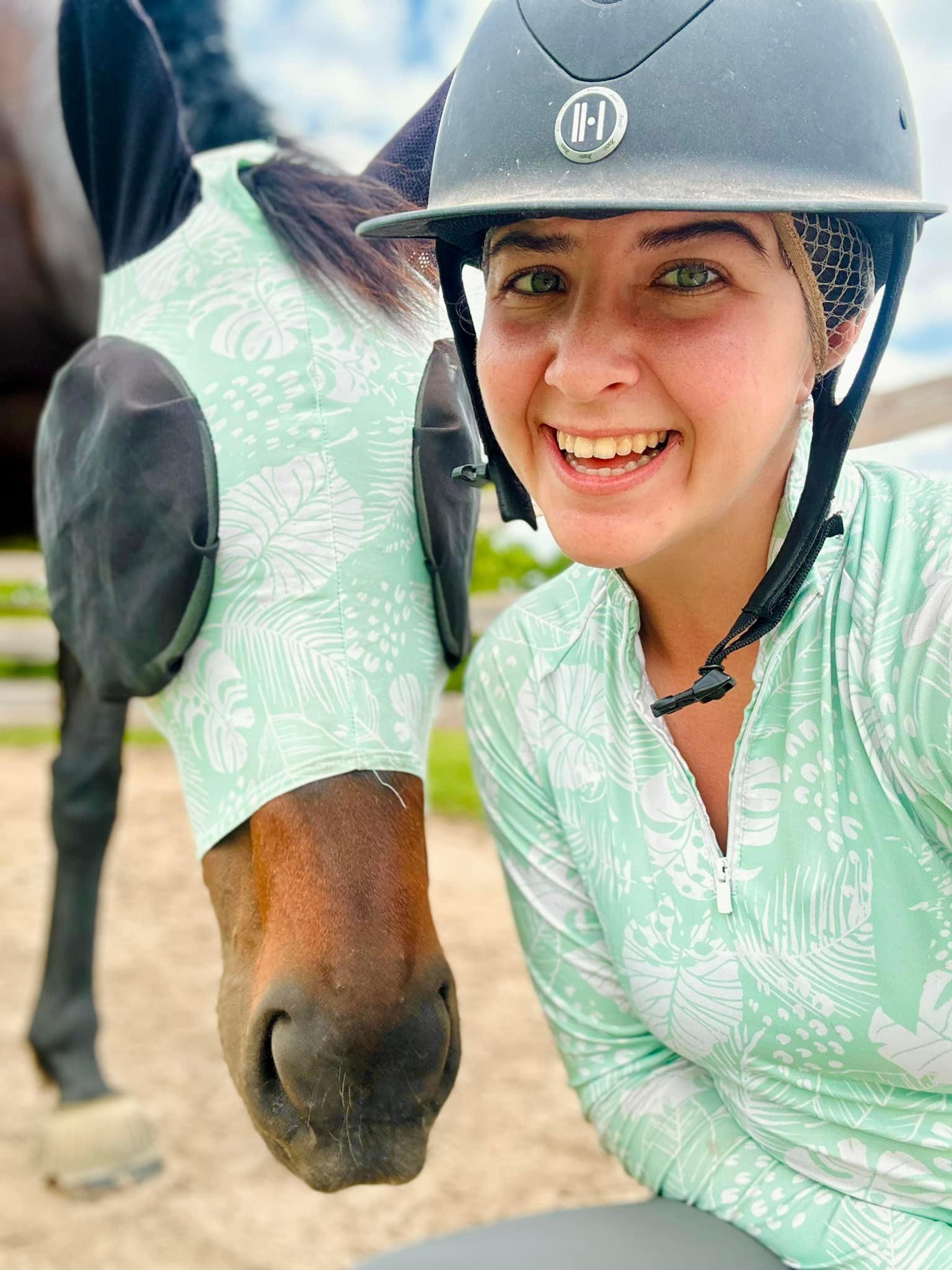
If you’ve ever felt guilty for hopping off mid-ride to give your horse a cookie, let me free you from that right now.
Those pauses aren’t indulgent. They’re not signs of a lazy trainer. They’re actually one of the smartest things you can do for your horse’s learning — and there’s real science to back it up.
Why Your Horse’s Brain Needs Breaks
Here’s the thing about learning: it doesn’t happen in the moment you’re drilling an exercise. It happens in the spaces between.
Neuroscience research shows that during rest periods, the brain enters what’s called “default mode network” activity. This is when memory consolidation actually occurs — when the brain takes all those scattered pieces of new information and organizes them into something your horse can actually retain.
Think about your own learning. Ever struggled with a problem, walked away, and come back with sudden clarity? That’s your brain doing background processing. Horses work the same way.
When we train without breaks, we’re essentially trying to pour more water into an already full glass. The information has nowhere to go.
The Research on Food Rewards
Beyond the rest itself, there’s something specific about food rewards that speeds up learning.
Studies from Kentucky Equine Research found that positive reinforcement — particularly food rewards — leads to faster learning and longer-lasting results compared to negative reinforcement alone. Horses trained with strategic food rewards didn’t just learn quicker; they retained the information better over time.
And here’s the part I find most interesting: research published in Applied Animal Behaviour Science found that horses trained with regular positive reinforcement showed increased contact-seeking behavior. They actually wanted to be with their handlers more.
So not only do cookies help your horse learn — they help your horse want to be around you while doing it.
What a “Cookie Break” Actually Looks Like
I’m not talking about randomly shoving treats at your horse every five minutes. That creates a mugging problem, not a learning opportunity.
Here’s how I use them:
1. Mark the moment of success. When your horse genuinely tries and gets something right — a better step of shoulder-in, a softer transition, a moment of real balance — that’s your window. Halt. Reward. Let them process.
2. Use the walk. A long rein walk on a loose rein isn’t wasted time. It’s active recovery. Let your horse stretch, chew, look around. Their brain is literally consolidating what just happened.
3. Actually dismount sometimes. For really big breakthroughs or when your horse has been working hard mentally, hop off. Loosen the girth. Give them a few minutes standing with you, getting scratched, maybe grabbing some grass if you’re outside. This resets their nervous system for whatever comes next.
4. Keep sessions shorter than you think. Most learning happens in the first 20-30 minutes of focused work. After that, you get diminishing returns. Better to end with your horse curious and engaged than fried and checked out.
But Won’t Treats Make My Horse Pushy?
This is the most common objection I hear. And look — done poorly, yes. Treats can absolutely create a monster.
The difference is clarity. Research from the International Society for Equitation Science emphasizes that timing matters enormously in positive reinforcement. The reward needs to mark the exact behavior you want. Willy-nilly treats create confused, nudgy horses. Strategic rewards create partners who understand the game.
Some rules I follow:
- Treat from a pouch, not your pocket (creates distance between your body and the food)
- Only reward stillness — if they’re mugging, they’ve already missed the moment
- The treat follows the halt and the breath, not the other way around
- If mugging becomes an issue, go back to scratches on the withers until they calm down
What This Looks Like in a Real Ride
Let’s say you’re working on getting your horse softer through transitions. Here’s how cookie breaks might fit in:
- Warm-up (10 min): Long rein walk, easy trot, no demands. Let them find their body.
- First work block (10-15 min): Working on those transitions. When you get three good ones in a row? Walk break. Maybe a treat. Let them process.
- Second work block (10-15 min): Build on what clicked. When you feel a real shift — that moment where it gets easier — mark it. Halt. Treat. Walk on a long rein.
- Cool down: End while they still want more. Short. Sweet. Done.
Total ride time: 30-40 minutes. And your horse learned more than they would have in a 60-minute drilling session.
The Goal Isn’t Perfection — It’s Partnership
The best training happens when your horse is an active participant, not a passenger being pushed through movements. Cookie breaks, walk pauses, and strategic rewards all communicate the same thing: “I see you trying. That was good. Let’s take a moment.”
Horses aren’t vending machines where more pressure equals better output. They’re living, learning animals with nervous systems that need regulation, brains that need processing time, and spirits that respond to acknowledgment.
So the next time you feel guilty about that mid-ride treat break, remember: you’re not being soft. You’re being smart.
Want structured exercises that build softness with this kind of thoughtful approach? Check out my From Stiff to Supple in 28 Days course — it’s built around the principle that less drilling and more thoughtful work gets better results.