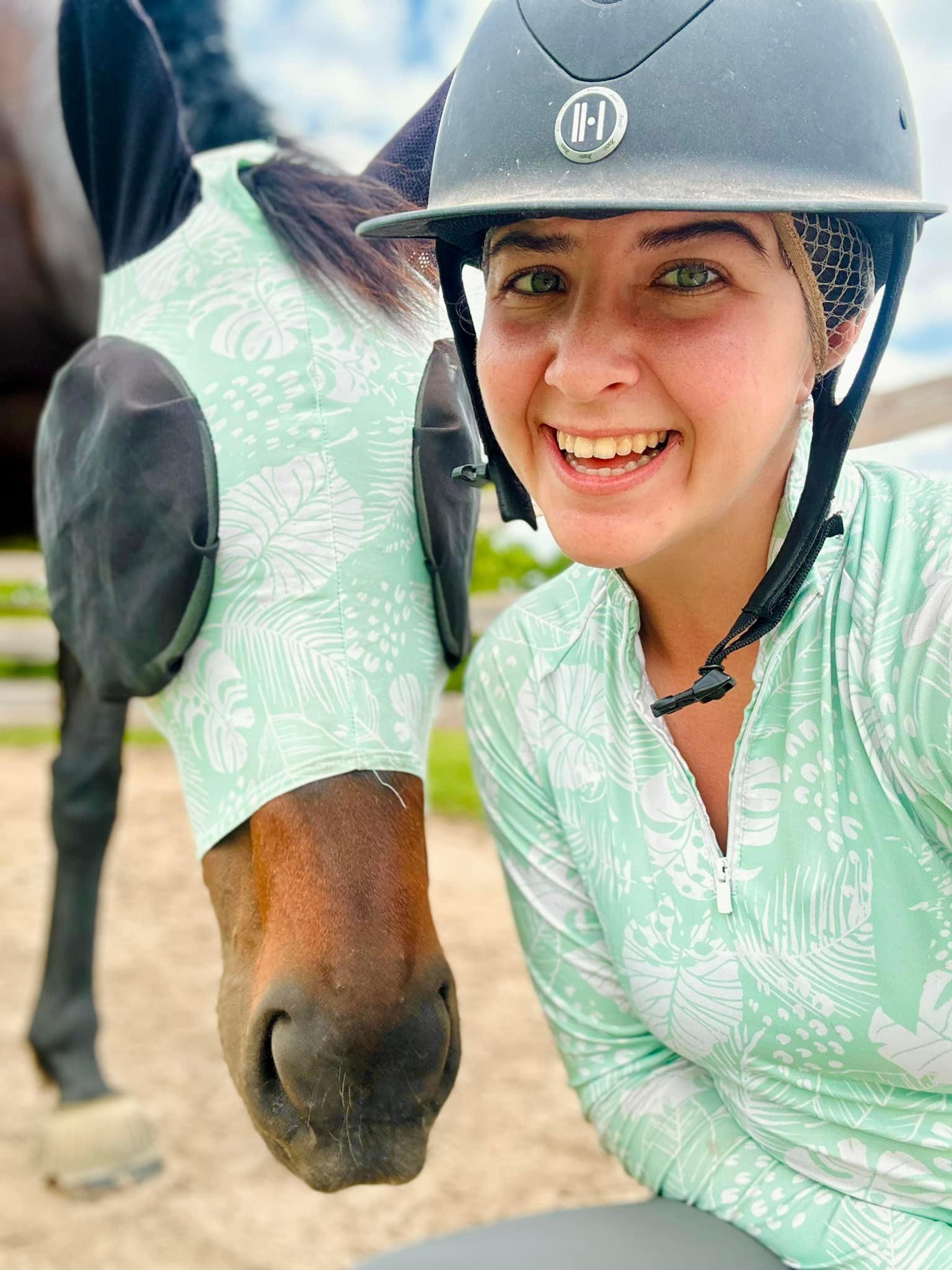
You know this horse. You pull him out of the stall in the morning and he walks like he is negotiating with his own hind end. The first several minutes of warmup are tentative — a little short behind, a little reluctant to push under, maybe some resistance to bending that disappears once he is moving and the joint fluid is circulating. He is not lame. He is stiff, and he needs time. The question is whether you can do something useful with that time instead of just circling at a walk and waiting.
That is exactly the situation the Benefab Rejuvenate Smart Hock Boots were built for. I have been using them as part of a pre-ride warmup routine and the difference in how quickly horses settle into their work is consistent enough that I would not want to be without them.
This post contains affiliate links. If you shop through them I may earn a small commission at no extra cost to you — and you’ll get my reader benefits. I only feature gear I’d actually put on my own horses or wear for a full day in the saddle.
What the Smart Hock Boots Actually Do
Before I get into routine specifics, I want to be clear about what these boots are and what they are not. They are not a veterinary device and they are not going to resolve a diagnosable hock condition. If your horse has been evaluated and has a specific structural finding in the hock region, your vet is the right conversation to have about treatment.
What the Smart Hock Boots do is support warmth and circulation in the hock area during the period before work — and that matters more than people typically credit. The therapeutic fabric Benefab uses works by interacting with the horse’s own body heat to support circulation in the soft tissue around the joint. The result is a hock that goes into the warmup phase already a little warmer and more supported than it would be if the horse had simply stood in a stall.
Many riders and owners report that horses wearing the boots before and during their initial warmup seem to move more freely sooner — less early-session resistance, quicker engagement behind, more willingness to step under. That is a behavioral and comfort observation, not a medical claim. But when I see it consistently across multiple horses, I stop dismissing it as coincidence.
The boots sit at $119.95 and cover the hock joint directly, with a design that stays in place during hand-walking and light work. The fit is snug enough to maintain contact without being restrictive, and the closure system is secure without requiring complicated wrapping technique. Put them on, walk your horse for twenty minutes, pull them off before you ride. That is the routine.
How to Build the Warmup Routine Around Them
This is the part that matters most and the part I see people skip: a product is only as useful as the routine you build around it. The Smart Hock Boots are not a passive fix you slap on and ignore. They work best as an active part of a structured pre-ride protocol.
Here is what I recommend, and what I use with my own horses:
Twenty minutes before you plan to tack up, pull your horse from the stall and put the Smart Hock Boots on. Walk him in hand — not just standing at the crossties, actually moving. Hand-walking activates the muscles and encourages the joint fluid to move while the boots are supporting warmth. Ten to fifteen minutes of steady, forward hand-walking while the boots are on gives you far better results than standing still for twenty minutes.
After hand-walking, tack up normally. Pull the boots off before you mount. At this point, your horse should feel noticeably more ready to work than if you had pulled him straight from the stall and gotten on.
During the mounted warmup, you can then focus your early walk work on actual quality rather than just survival mode. Ask for lateral steps. Ask for some shoulder-fore. Encourage him to step under rather than just shuffling forward. Because the hocks have been through a supported warmup, you are more likely to get useful responses.
This routine adds about twenty minutes to your morning. If you have a stiff horse, that twenty minutes is not optional time — you were spending it anyway doing unproductive circles. Now you are spending it doing something with a purpose.
Who This Routine Suits Best
The warmup routine above is most valuable for three specific types of horses:
The senior sport horse. Horses in their late teens and early twenties that are still in work are often stiff in the morning for reasons that are simply age-related. They are not unsound. They just need longer to feel good. The Smart Hock Boots used consistently as part of a morning routine support their comfort during that transition from stall rest to work, and many owners notice their older horses are more willing and less reactive in the early minutes of a ride.
The horse that winters hard. If you are in a climate where horses are stalled more in cold months and come out stiff in the morning even in warmer seasons, this boot is doing work for you. The hocks are one of the first joints to feel the effects of prolonged rest, and the circulatory support from the therapeutic fabric is particularly relevant in that context.
The horse with seasonal stiffness. Some horses show stiffness patterns that track with weather changes — spring and fall being the most common. If you have noticed your horse takes longer to warm up during weather transitions, integrating the Smart Hock Boots into your routine during those windows specifically can help maintain comfort and willingness through the adjustment period.
Who it does not suit: if your horse has acute swelling, heat, or any lameness presentation, this is a conversation for your veterinarian before you add any boots or wraps to the equation. The Smart Hock Boots are for comfort support in the non-acute horse, not for managing active inflammation or injury.
Ready to try the Benefab Smart Hock Boots? Use my link for my reader benefits at Benefab → https://bit.ly/4uhqYoF
Pairing the Hock Boots with Other Benefab Products
The Smart Hock Boots handle the hock area specifically. If you are dealing with a horse that presents stiff across the whole hind end and lower leg, there are two other Benefab products worth stacking into the routine.
The Therapeutic Smart QuickWraps at $199.95 cover the lower leg below the hock — cannon, fetlock, and pastern region. For the horse that stalls overnight and tends to stock up behind, using the QuickWraps from the end of one ride through to the next morning, then transitioning to the Smart Hock Boots as part of the pre-ride warmup, gives you coverage across the full hind leg. I have covered the QuickWraps in detail in the post on stocking up overnight, so I will not repeat that ground here — but the short version is that they layer well with the hock boots because they address different zones.
For the horse that also presents stiff through the neck and shoulder — and stiff hocks often correlate with compensatory tension further up the topline — the Rejuvenate SmartHood at $179.95 is worth adding to the post-ride portion of the routine. Use the SmartHood during the cooldown while you are walking him out. It covers the neck and shoulder region and many riders report their horses relax noticeably in the neck during cooldown when wearing it. I have talked about reading these behavioral cues in more depth on the podcast if you want the full breakdown on how to assess whether your horse is genuinely releasing or just habituating to stimulus.
You do not need all three products at once. Start with the Smart Hock Boots because they address the most specific and immediate need — hock stiffness at the start of work — and add the others as your budget and your horse’s needs warrant.
Practical Notes Before You Buy
A few specifics worth knowing before you order:
The Smart Hock Boots are sold as a pair and are designed to fit most sport horse and warmblood hock conformations. If your horse has a particularly small or large hock, check the Benefab sizing guidance before ordering. The boots need to make consistent contact around the hock joint to deliver warmth effectively — a boot that gaps or slides is not doing the job.
The closure system does not require wrapping experience. If you are comfortable putting on a standard splint boot, you can put these on without a learning curve. That matters if you are delegating the pre-ride routine to a groom or barn staff who may not have extensive wrapping background.
The boots are hand-washable, which is relevant because you will be putting them on a sweaty horse in summer. Plan to wash them weekly if you are using them daily and rinse the interior after every use. The therapeutic fabric holds up to regular cleaning without degrading, but you do need to let them dry fully before the next use — do not put a damp boot on a horse.
At $119.95, they sit in the middle of the Benefab leg product range. They are not the cheapest option in the lineup, but they are addressing a specific joint area with a targeted design, which justifies the price point. For the stiff horse you are riding four or five times a week, the math on daily comfort support adds up quickly in terms of quality of the work you are getting.
The horse that takes ten minutes to feel like himself in the warmup is not a horse you should be frustrated with — he is a horse whose routine needs adjusting. The Benefab Smart Hock Boots are the most direct tool I have found for that specific gap between stall and ready-to-work. Build the routine, be consistent with it, and pay attention to how quickly your horse settles into the early work. Most riders notice the difference within the first week.
Ready to add the Smart Hock Boots to your warmup routine? Use my link for my reader benefits at Benefab → https://bit.ly/4uhqYoF