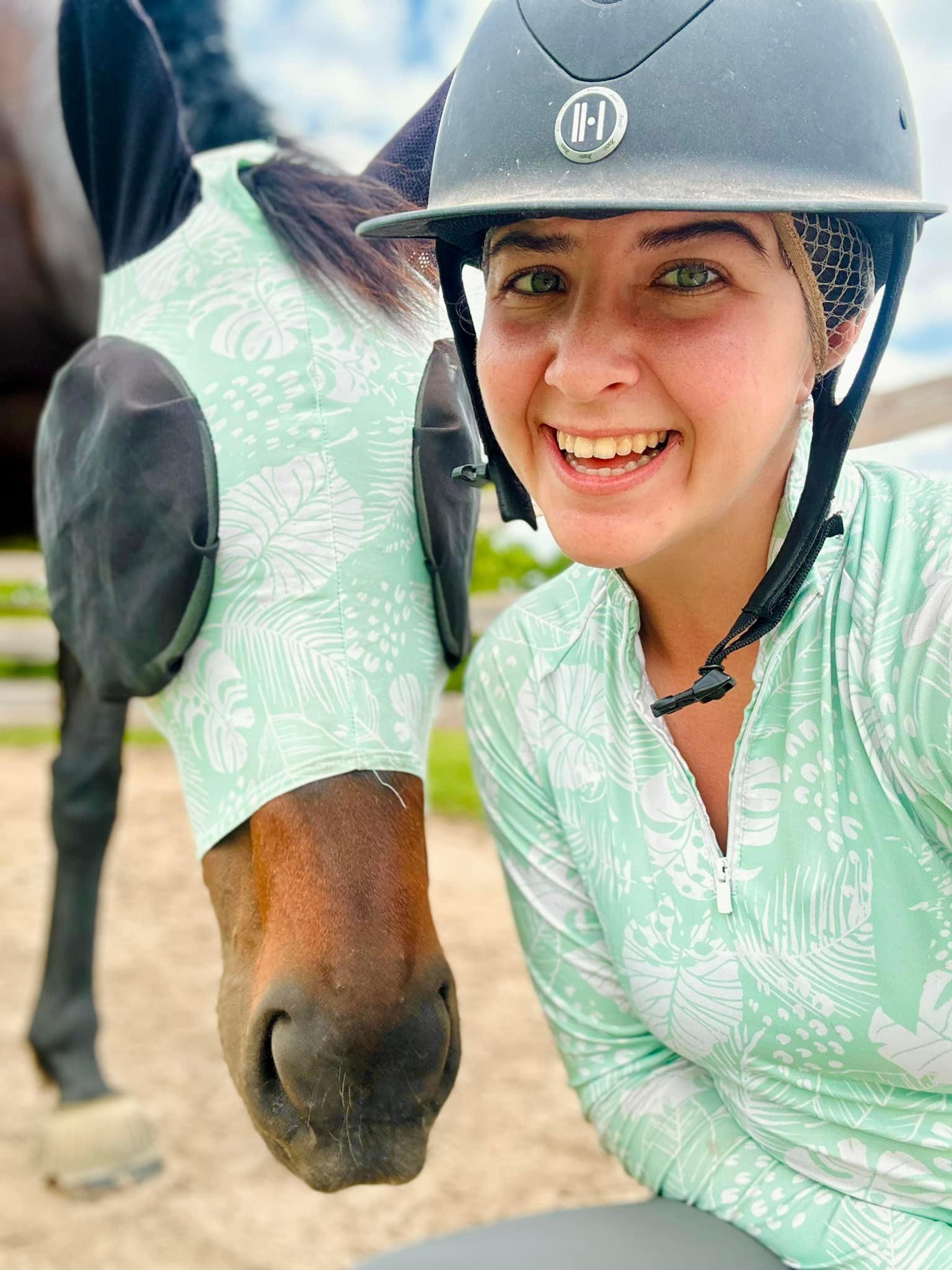
Three days of showing is not three days of riding. It is three days of hauling, holding, waiting, going, cooling out, re-braiding, stall-walking, and starting over. By Sunday afternoon your horse has been on her feet for the better part of 72 hours, performed under pressure multiple times, and spent most of her downtime in a temporary stall on strange footing under artificial lights. That accumulates. Legs stock up. Backs tighten. Lower legs that were fine on Friday start looking puffy by Saturday night. None of that is dramatic, but all of it is real, and what you do in the hours between classes and after the last ride of the day determines how your horse feels when you ask her to go again the next morning.
This is the protocol I have settled on for three-day competition weekends. It centers on three Benefab products used in a specific sequence: the Rejuvenate SmartScrim, the Therapeutic Smart QuickWraps, and the Therapeutic Pastern Wraps. None of them replaces veterinary care, cold hosing when it is warranted, or good horsemanship judgment. But as a daily recovery layer, this combination covers more ground than anything else I have tried.
This post contains affiliate links. If you shop through them I may earn a small commission at no extra cost to you — and you’ll get my reader benefits. I only feature gear I’d actually put on my own horses or wear for a full day in the saddle.
The Three-Product Protocol at a Glance
Before I get into each product in detail, here is how the three pieces work together across a competition day. The sequencing matters as much as the products.
| Product | When | Role in the Protocol |
|---|---|---|
| Rejuvenate SmartScrim — $349.95 | Immediately post-ride, during cool-out | Full-body warmth and circulation support; back, shoulder, and hindquarter coverage during the cool-down window |
| Therapeutic Smart QuickWraps — $199.95 | After cool-out, overnight | Lower-leg circulation support; primary tool for managing stocking-up between classes and overnight |
| Therapeutic Pastern Wraps — $39.95 | Layered under or alongside the QuickWraps | Pastern-area coverage for horses who tend to show sensitivity or puffiness specifically at the pastern and fetlock |
The SmartScrim goes on first and comes off once the horse has cooled and dried. The QuickWraps and Pastern Wraps go on for the overnight portion of the recovery window. Morning of, everything comes off, legs get assessed and unwrapped properly, and the horse goes forward into the day.
Rejuvenate SmartScrim — $349.95
The Rejuvenate SmartScrim is the piece of this protocol that does the most work in the least visible way. It looks like a standard scrim sheet — the kind you throw over a horse during cool-out to keep the chill off while she dries — and it functions as one. But the fabric is mineral-infused to absorb the horse’s own body heat and return it as far-infrared energy, which means the cool-out period becomes a continuous warmth-and-circulation support session rather than just a waiting period while sweat dries.
At a show, the cool-out window is often rushed. You have a class finishing, a barn aisle full of other horses, a groom pulling braids, and a 45-minute window before the stall needs to be ready for another horse. The SmartScrim lets that window work harder. You are not just waiting for the horse to stop sweating — the fabric is actively supporting circulation through the back, topline, shoulder, and hindquarter during every minute of that cool-out.
Why this matters specifically at a competition weekend. A horse who has competed for two or three consecutive days accumulates tension through the back and hindquarter in ways that do not fully resolve between brief rest periods in a stall. The back that was soft on Friday becomes progressively more guarded through Saturday and Sunday if nothing is addressing it during the recovery hours. Many riders notice their horses settle visibly under the SmartScrim — the topline releases, the neck drops, the hind leg rests. That is the product doing its job, and at a three-day show it is cumulative: the horse who was managed well on Friday night is easier to manage on Saturday morning.
Fit and practical notes. The SmartScrim fits like a standard scrim sheet. It is designed to go on a horse who is still warm from work and can be used in a stall once the horse has been hand-walked or cooled on the end of a lead. At a summer show in particular, it works well in combination with fans — the scrim provides the therapeutic warmth layer while airflow handles the sweating horse’s need to dry down. It is not a blanket and should not be used as one; this is a cool-out and immediate post-work tool.
The $349.95 price is the highest single-product investment in this protocol, and it is the one I would prioritize first if I were building this routine from scratch. The back and topline coverage during cool-out is where recovery starts, and this is the most direct tool you have for that window.
Therapeutic Smart QuickWraps — $199.95
The Therapeutic Smart QuickWraps are where the lower-leg portion of this protocol lives. If you have ever shown a horse for three days and watched the legs stock up progressively — clean Friday morning, slightly filled Saturday, noticeably puffy Sunday before the first class — you already understand the problem these wraps are designed to address.
Stocking up at a show is common and not inherently alarming. Horses stand more than they move, the footing is different, turnout is limited or nonexistent, and the stress of showing affects everything from gut motility to circulation. But managing that stocking up proactively matters, both for the horse’s comfort and for the practical reality that a horse working with congested lower legs is not moving as freely as she could.
The QuickWraps apply gentle compression and deliver the same far-infrared warmth technology as the SmartScrim — mineral-infused fabric that supports circulation in the lower leg during the hours they are worn. They go on after cool-out, after the SmartScrim comes off, and stay on overnight. In the morning you unwrap, assess the legs, and decide whether another application is warranted before or after the day’s first class.
Application notes. The QuickWraps are designed to go on without a separate standing wrap underneath, which matters at a show where you are managing multiple horses and do not have unlimited time for a full bandaging job on four legs. They have sufficient structure to stay put overnight without slipping. I have used them on horses who are dedicated wrap-removers and have not had issues with shifting or bunching by morning, which is a real-world test that a lot of wraps fail.
Colors available are Black, Bubblegum Pink, Royal Purple, and Glacier Blue. At a show where turnout matters, the color range is practical — they are visible and recognizable across a barn aisle, which is useful when multiple horses are wrapped and you are managing them in sequence.
Who benefits most from the QuickWraps in this protocol. Horses who consistently stock up overnight, horses who are doing their first multi-day show and whose legs you are monitoring carefully, and horses who tend to show tightness or guarding in the lower leg after repeated work days. Horses who do not typically stock up may not need overnight wrapping on Day 1, but by Day 3 most horses doing serious work will benefit from the support regardless of baseline.
Ready to try the Benefab competition recovery protocol? Use my link for my reader benefits at Benefab → https://bit.ly/4uhqYoF
Therapeutic Pastern Wraps — $39.95
The Therapeutic Pastern Wraps are the most overlooked piece of this protocol and the most targeted. While the QuickWraps cover the lower leg broadly — cannon bone, tendons, fetlock area — the Pastern Wraps address specifically the pastern and fetlock region, which is where a lot of horses carry subtle tension or sensitivity that does not always announce itself dramatically.
At $39.95 for a set, they are the lowest barrier to entry in this protocol, and they add meaningful coverage that the QuickWraps alone do not provide. They are particularly useful for horses who show sensitivity specifically at the pastern — horses who are short-strided after a rest period, horses who are touchy to handle around the lower pastern during grooming, or horses who have a history of puffiness or reactivity in that area that is not the same as a clear lower-leg stocking-up pattern.
How I layer them into the protocol. I apply the Pastern Wraps underneath or alongside the QuickWraps depending on the horse. On horses with a clear pastern-area sensitivity history, the Pastern Wraps go on first as the innermost layer, and the QuickWraps sit over the top. On horses who are more generally lower-leg-focused, I may use the Pastern Wraps alone during a rest period between classes when I do not want full QuickWrap coverage — a quick application during the afternoon break, removed before the next class.
At a three-day show, this also becomes a monitoring tool. If a horse who does not normally present sensitivity in the pastern area starts showing interest in having that area touched, or begins pulling back when you reach for the lower leg, that is information. The Pastern Wraps support comfort in that region throughout the recovery window, and they give you a more complete picture of how the horse is responding to workload day over day.
Colors available: Electric Blue, Royal Purple, Bubblegum Pink, and Black — same range as the QuickWraps, which makes it easy to coordinate across your competition kit if that matters to you.
I talk through the logic of whole-horse monitoring across multi-day competition on the podcast — the decision-making process when a horse is accumulating fatigue across days rather than presenting a single acute issue is worth thinking through before you are in the middle of a show weekend and making real-time calls.
Building the Protocol Into Your Show-Weekend Routine
Here is how this actually runs at a three-day show, from a practical management standpoint.
Day 1, post-ride: SmartScrim goes on immediately after the last class of the day, during the full cool-out. Horse gets hand-walked or stood in front of a fan while she dries and relaxes. Once dried and cooled, SmartScrim comes off. QuickWraps and Pastern Wraps go on for overnight. Check-in before lights out.
Day 2 morning: Wraps come off. Legs assessed — run both hands down each leg, check for any asymmetry in heat or filling. If legs are clean, horse goes forward into the day’s schedule unwrapped. If any stocking up is present, cold hose or apply your standard protocol before addressing with wraps again during the day’s rest period.
Day 2, post-ride: Same sequence as Day 1. This is where the SmartScrim earns its keep most — a horse going into the second night of a show is more accumulated in her back and hindquarters than she was going into the first, and the cool-out coverage matters more, not less.
Day 3: By Sunday your horse has been working for two full days. This is the morning where you want clean legs most and may find them least cooperative. A horse who was managed well on Friday and Saturday nights will give you a much better starting point on Sunday than one who spent two nights unstretched. The overnight QuickWrap and Pastern Wrap protocol is doing its job across all three nights — the return is cumulative, not single-session.
What this protocol does not replace. Cold hosing when heat or significant filling is present. Veterinary assessment if something changes acutely. Good stall management — hay, water, a horse who is eating and drinking. A hand-walk between classes rather than pure stall rest when schedule allows. This is a recovery-support layer, and it works best when the fundamentals are already in place underneath it.
The Bottom Line on the Benefab Competition Protocol
A three-day show asks your horse to perform, recover, and perform again in a compressed window under conditions that are not optimized for any of those things. The SmartScrim covers the full-body cool-out and back recovery window. The QuickWraps manage the lower-leg overnight. The Pastern Wraps add targeted coverage at the pastern and fetlock for horses who need it — and at $39.95 they are the easiest addition to justify.
Used together, these three products give you a complete post-ride-through-overnight recovery routine that runs on the horse’s own body heat, requires no electricity or special setup, and fits into the practical constraints of a busy show barn. The investment is real — particularly the SmartScrim — but it is an investment in showing up to Sunday’s classes with a horse who has been managed well rather than simply rested.
Rejuvenate SmartScrim — $349.95 — for the post-ride cool-out and full-body recovery window.
Therapeutic Smart QuickWraps — $199.95 — for overnight lower-leg circulation support and stocking-up management.
Therapeutic Pastern Wraps — $39.95 — for pastern-area coverage and the horse who carries sensitivity specifically in that region.
Ready to build your competition recovery kit? Use my link for my reader benefits at Benefab → https://bit.ly/4uhqYoF